
Let’s start with a truth most people don’t know:
Frozen isn’t the opposite of fresh. Bad freezing is. That’s where IQF comes in.
If you work in ice cream, pastry, desserts, cafes, smoothies, gelato, R&D, or food science—and you don’t understand IQF—you’re probably leaving consistency, flavor, and product quality on the table.
So let’s break this down simply, honestly, and without industry jargon.
So, What Is IQF?
IQF = Individually Quick Frozen.
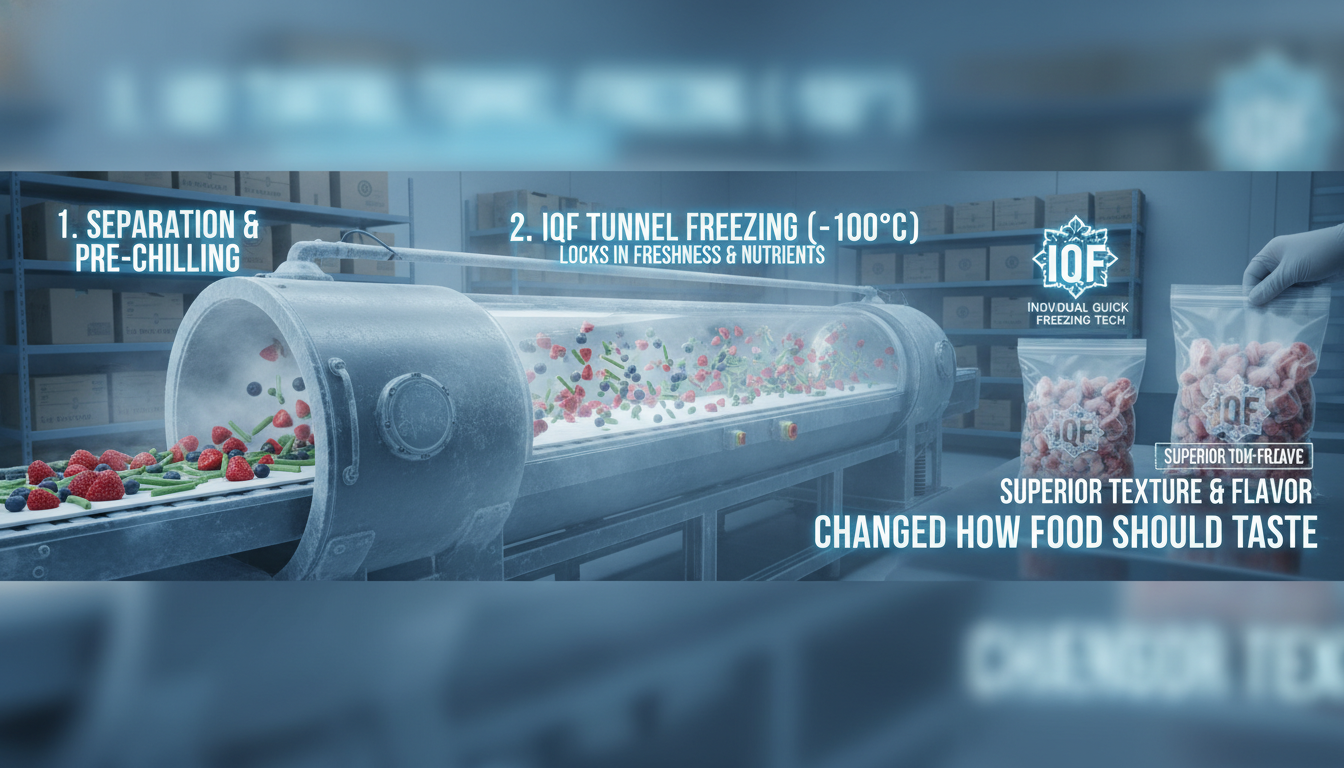
The idea is simple: Instead of freezing fruit in a block (where everything sticks together, becomes icy, and loses texture), IQF freezes each piece of fruit individually—within minutes—at extremely low temperatures.
The result?
-
Every berry stays separate.
-
Every mango cube stays intact.
-
Every piece tastes like the fruit it came from, not freezer.
Where Most People Get It Wrong
A lot of people think: “Frozen means old, stale, and worse than fresh”. No, Regular freezing does that, and IQF doesn’t.
Traditional freezing is slow. Slow freezing forms large ice crystals, which break cell walls, causing mushy fruit, color loss, and flavor dilution.
IQF uses rapid, shock-level freezing that forms tiny micro-crystals, preserving:
-
Natural texture
-
Color vibrancy
-
Aroma compounds
-
Water-soluble nutrients (even Vitamin C)
This is why IQF strawberries taste like strawberries—not strawberry-flavoured ice.
How IQF Works (Clear, Quick Breakdown)
1. Harvest at Peak Ripeness
Fruit is picked when it's naturally sweet—not underripe for transport.
2. Wash, Sort, and Quality Check
Damaged, under-ripe, or overripe fruit? Removed.
3. Cut / De-hull / Slice (If Required)
Only edible fruit goes forward.
**4. Blast Freeze at -30°C to -40°C
Rapid freezing. Minutes, not hours.
5. Each Piece Gets Frozen Individually
No lumps. No blocks. No slush.
6. Stored and Shipped Through a Controlled Cold Chain
Because breaking the chain = ruining everything.
IQF vs Regular Freezing (Simple Table)
|
Factor |
Regular Freezing |
IQF Freezing |
|
Texture |
Mushy |
Firm & natural |
|
Color |
Dulls over time |
Bright & retained |
|
Flavor |
Diluted |
Close to fresh |
|
Ice Crystals |
Large |
Micro-crystals |
|
Portion Control |
Impossible (clumps) |
Easy (take what you need) |
Benefits of IQF Frozen Fruit
(Especially for food professionals)
-
Consistent taste, year-round (no dependency on seasons)
-
Stable supply chain (no market shock or price swings)
-
No prep time (washed, cut, sorted—ready to use)
-
Precise portion control (cost optimization)
-
Zero waste (use only what you need)
-
Nutrient preservation (antioxidants, flavor volatiles)
-
Standardized product R&D (critical for dairy & dessert systems)
If you develop recipes, serve customers, or scale production, you know consistency is king. IQF delivers that.
Where IQF Is Used (More than you think)
-
Gelato & Ice Cream formulation
-
Smoothie bars & shake counters
-
Designer desserts & pastry labs
-
Hotel & airline catering
-
Cloud kitchens & FnB aggregators
-
Craft cocktails & bar programs
-
Nutraceutical & wellness drinks
If your product depends on flavor + texture + repeatability, IQF matters.
So, Where Does FRUT Come In? (No Selling, Just Stating Facts)
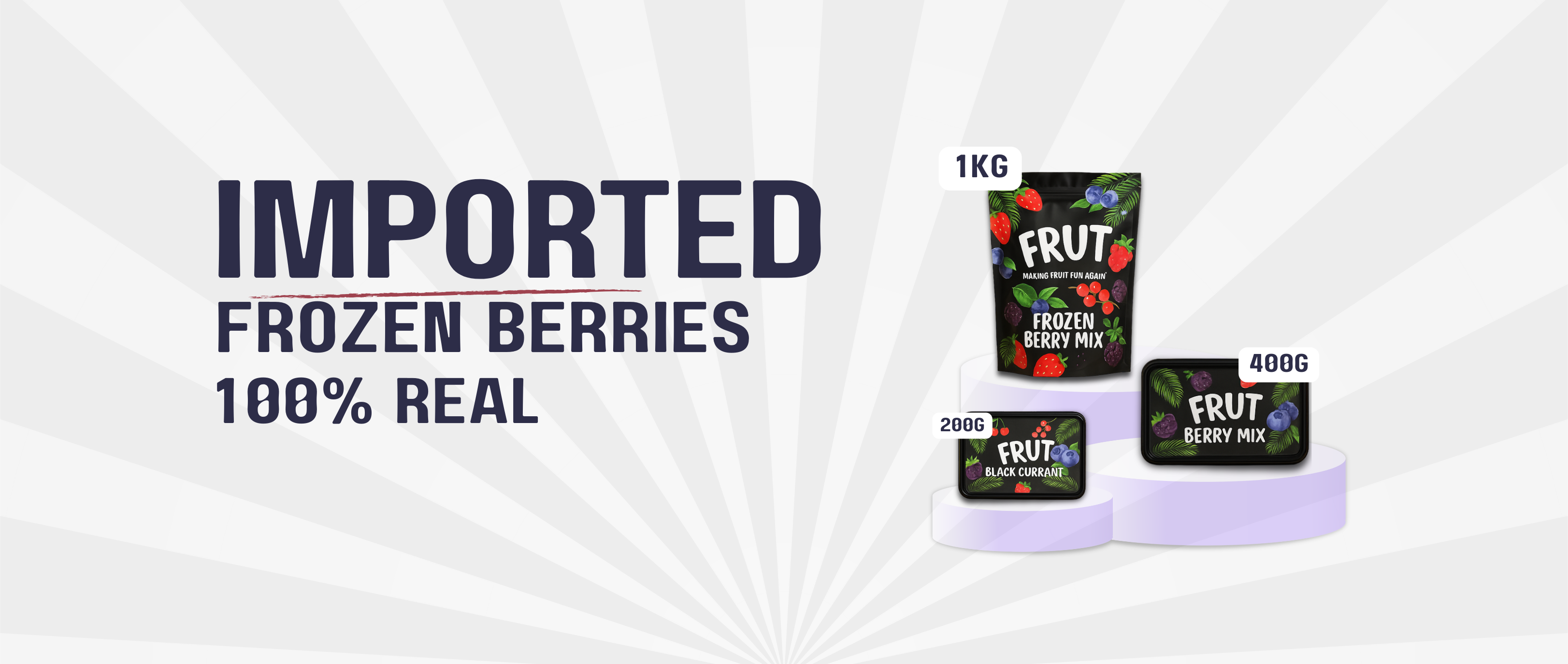
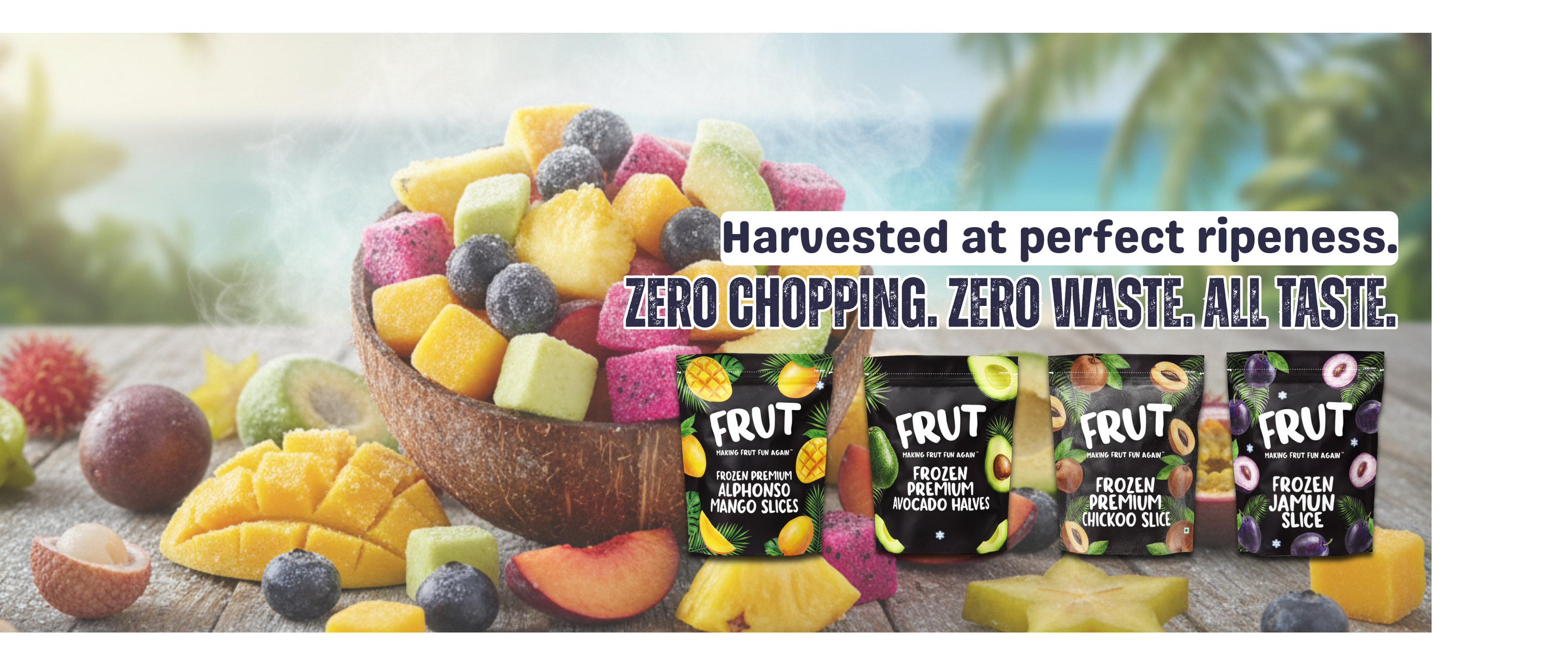
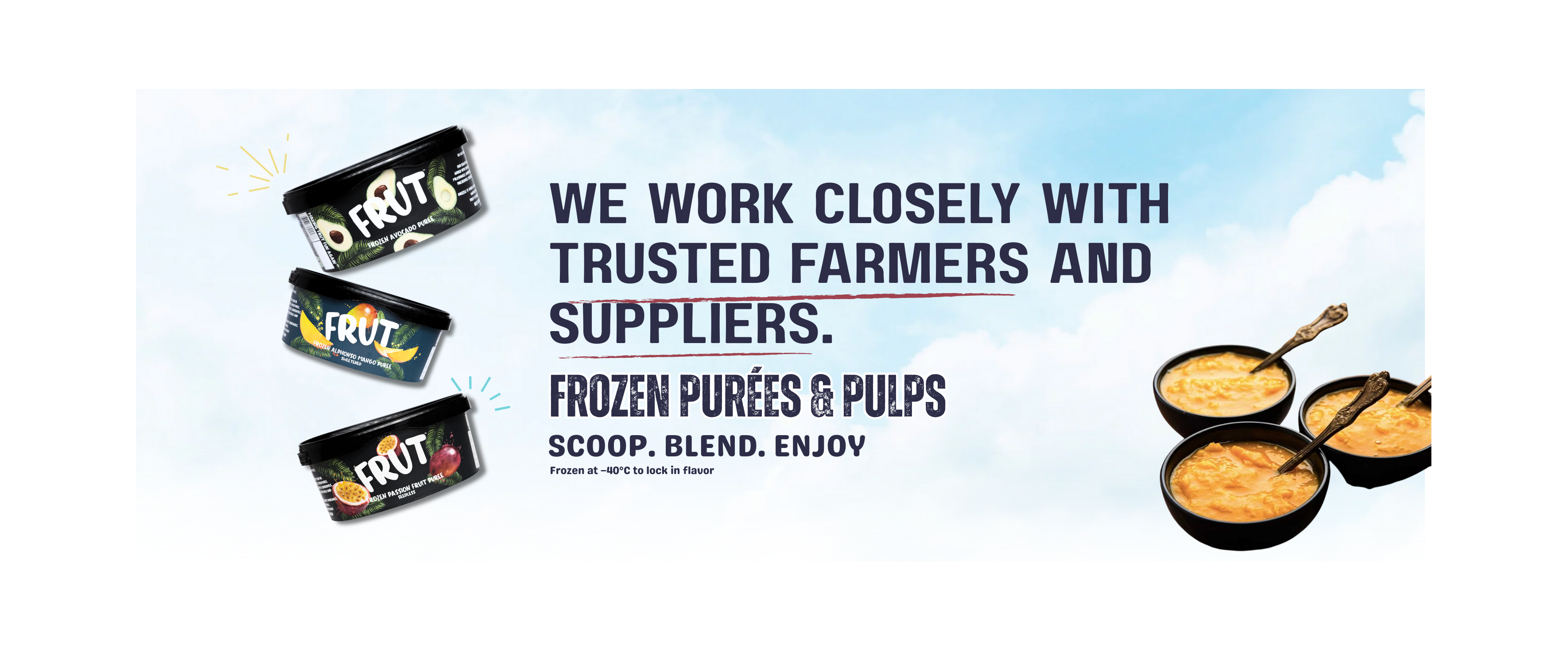
We work directly with farms, pick fruit at the right stage (not early, not late), and freeze it immediately using IQF technology.
No sugar. No syrups. No preservatives. No “improvers.”
If you are building:
-
A smoothie menu,
-
A gelato line,
-
A pastry showcase,
-
A beverage program…
You need fruit that behaves the same every day. That’s why FRUT exists.
Conclusion
IQF isn’t about freezing. It’s about picking it at its best. Preserving it at its best. Delivering it at its best, so your product? Can taste its best.
If you want fruit that performs—not just exists—choose IQF.
If you want IQF without nonsense, choose FRUT.
Share:
5 Reasons You Should Include Fruits in Your Daily Lifestyle (No Overthinking Required)
Hass Avocado vs Indian Avocado: What’s the Real Difference?
1 comment
Great products with great value