


We all know avocado has become the golden child of “healthy eating.”
But walk into a store or scroll online and suddenly you're faced with two options that look similar… but behave very differently: Hass avocado vs Indian avocado.
And no one tells you which one to choose — or why.
So let’s tell the Facts.
No fancy nutrition jargon. No “superfood” hype.
Just clarity, taste, texture, and how to actually use them.
So… Why Does This Comparison Even Matter?
Because the wrong avocado can ruin your dish.
Ever tried making guacamole with a watery avocado?
Yeah — painful.
Most people don’t realize:
- Not all avocados are creamy.
- Not all are meant for smoothies or toast.
- Some are great for blending, others are better for slicing.
- And yes — there is a price difference for a reason.
Let’s break it down.
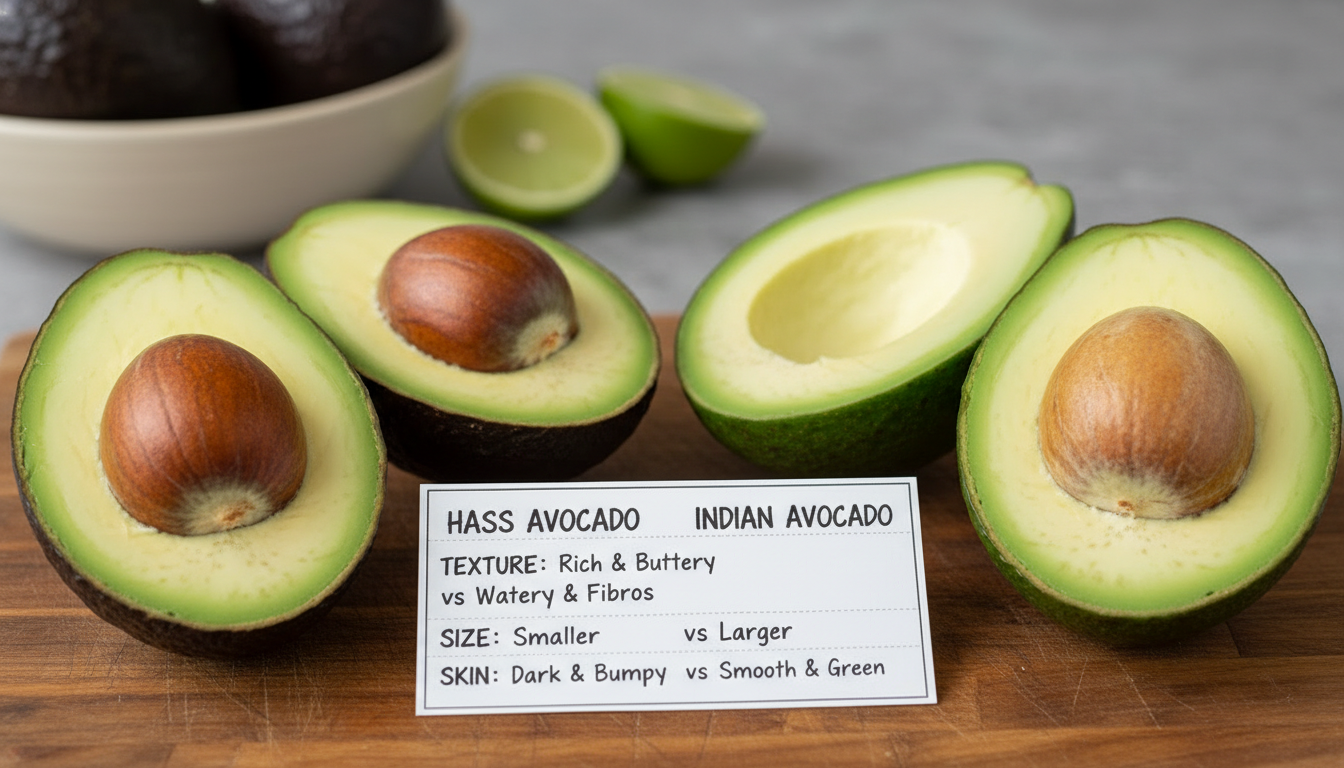
Hass Avocado vs Indian Avocado: The Clear Difference
|
Feature |
Hass Avocado |
Indian Avocado (Butter Fruit) |
|
Skin |
Dark, rough, pebbly |
Smooth, shiny, green |
|
Texture |
Extra creamy & buttery |
More watery and fibrous |
|
Taste |
Rich, nutty, fuller flavor |
Mild, sometimes bland |
|
Best For |
Guacamole, toast, dips, sushi, salads |
Smoothies, shakes, spreads |
|
Price |
Higher |
More affordable |
|
Ripening |
Turns soft when ripe |
Stays firm even when ripe |
Why This Matters
If you want:
- Creamy guac → Hass
- Smoothie thickness → Indian works
- Silky toast topping → Hass
- Every day blending → Indian
It's not that one is better than the other.
They’re just built differently.
Hass Avocado Characteristics (What Makes It “Special”)
Hass has:
- More healthy fats
- Smaller seed
- Softer, creamier flesh
- Rich, distinct flavor
This is why:
- Restaurants use Hass for guac
- Chefs use Hass for plating
- Food bloggers post Hass on avo-toast pics
(Not because of aesthetics, but because the texture behaves.)
Indian Avocado Benefits (Why It Still Deserves Respect)
Indian avocados grow locally — which means:
- Lower carbon footprint
- Fresher supply
- More affordable pricing
They:
- Blend easily in shakes
- Add creaminess to lassi/smoothies
- Works beautifully in baby food and purees
So if your goal is everyday nutrition and less cost → go Indian.
If your goal is texture perfection and flavor depth → Hass is your friend.
How to Choose a Ripe Avocado (So You Don’t Cry Later)
For Hass Avocado:
- Skin goes from green → purple → black
- Press gently — it should feel like a soft sponge (not squishy)
For Indian Avoacado:
- Color doesn’t change
- Press near the stem — slightly soft = ripe
- If it dents deeply → overripe
Pro Tip: If unsure → let it ripen outside, then store in fridge to slow softening.
Which One Should You Use Where?
|
Dish / Use |
Best Choice |
Why |
|
Guacamole |
Hass Avocado |
Creamy + holds texture |
|
Smoothies / Shakes |
Indian Avocado |
Blends smoothly + cheaper |
|
Avocado Toast |
Hass Avocado |
Smooth spread, rich flavor |
|
Salads |
Hass Avocado |
Slices without falling apart |
|
Baby Food |
Either |
Both are nutrient-rich |
|
Bulk Daily Use |
Indian Avocado |
Budget-friendly |
So, Where Does FRUT Come In? (Honest Answer)
Here’s the real reason people choose FRUT:
- We don’t add anything. No preservatives. No flavors. No shortcuts.
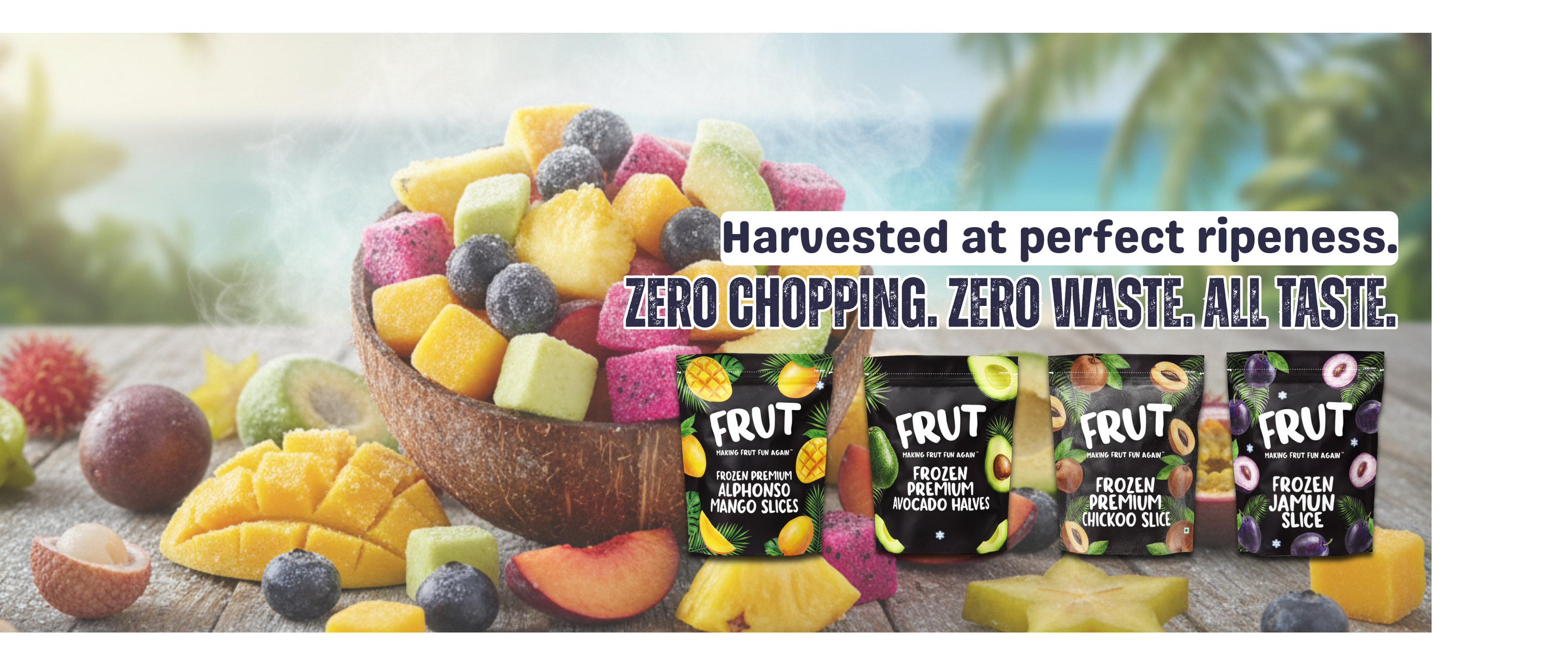
- Our frozen fruits are picked at peak ripeness.
- You get consistency — bag after bag.
So, whether you choose Hass or Indian, just choose the one that suits your purpose — and choose it in its clean, real form.
And yes — we do offer Avocado Halves made from ripe Hass.
Ready to scoop, mash, blend — zero guesswork.
Conclusion: Hass Avocado vs Indian Avocado — Who Wins?
Nobody wins.
Because they’re not fighting. They’re just different fruits for different uses.
- Want creamy luxury? → Go Hass.
- Want daily nutrition value? → Go Indian.
The important thing is:
You now know the difference. And that means you’ll choose better. BUY Hass Avocados:
Share:
What Is IQF? The Freezing Tech That Changed How Food Should Taste
Best Frozen Fruits for Diabetics: What Actually Works (And What Doesn’t)