
Let’s address the messy truth upfront:
When people hear “frozen fruit,” they imagine sad, mushy fruit cubes hiding in the back of a freezer.
And fresh fruit? We romanticize it like it’s straight from a farm when in reality, half the time… it's already halfway to spoiling by the time you cut it.
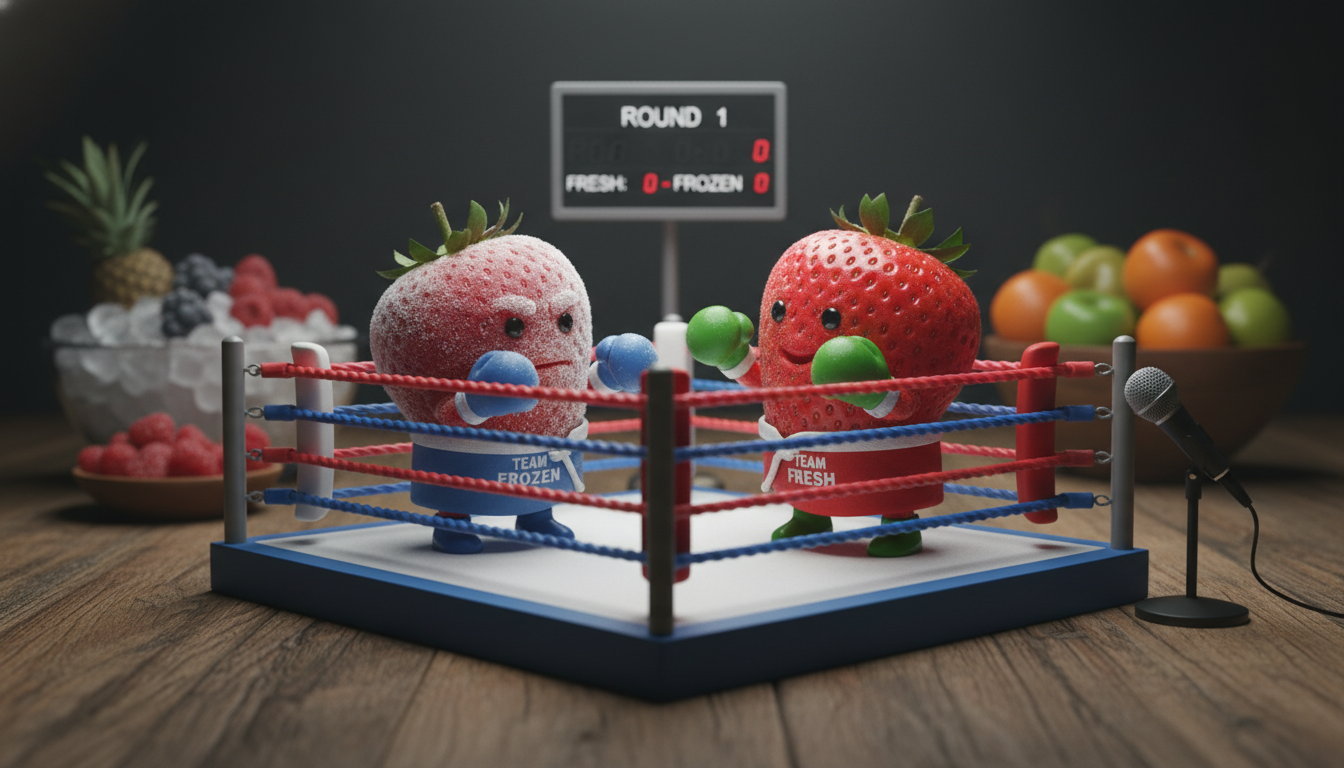
So when we talk about Frozen Fruit vs Fresh Fruit, let’s talk honestly.
Not the marketing version.
The real one.
The Problem: We Assume “Fresh” Means Healthier
You know this story.
You buy fresh fruit. It looks okay-ish.
You keep it in the fridge because “I’ll eat it tomorrow.”
Tomorrow becomes whenever.
And eventually, that fruit becomes compost.
Or worse, you force-eat it out of guilt. No joy. No taste.
Meanwhile, frozen fruit gets labeled as the “inferior cousin” — just because it’s frozen.
Here’s the uncomfortable truth:
Fresh fruit isn’t always fresh.
And frozen fruit isn’t always less nutritious.
Time to break this down like adults.
Frozen Fruit vs Fresh Fruit: What Really Happens to Nutrients:
Fresh Fruit:
-
Picked before it’s fully ripe.
-
Transported, stored, chilled, displayed under supermarket lights.
-
Loses nutrients over time.
Some studies show up to 50% vitamin loss by the time it reaches your kitchen.
Frozen Fruit:
-
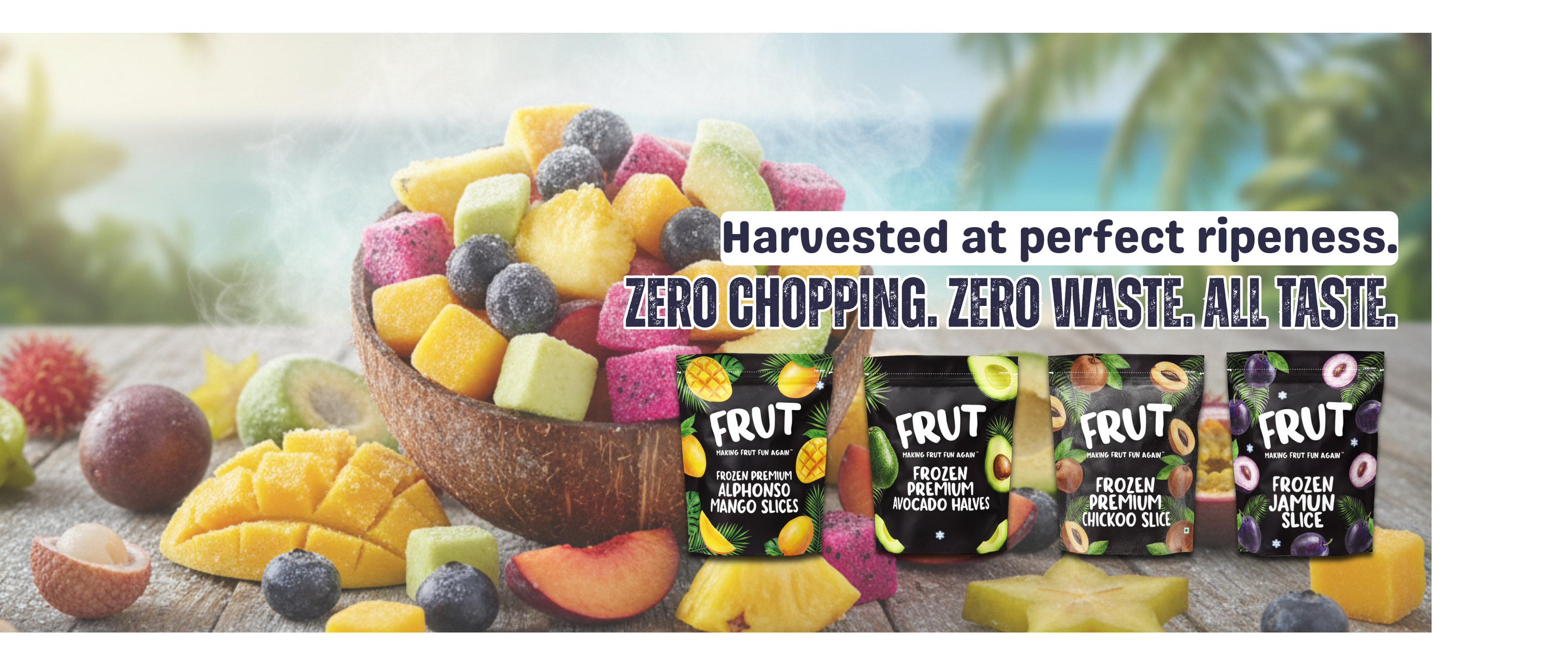
Picked at peak ripeness (when nutrients are highest).
-
Flash-frozen (IQF) within hours.
-
Nutrients get locked in.
So no, freezing does not “kill nutrients.”
It keeps them the way they were when the fruit was at its best.
IQF Frozen Fruit Explained (No Fancy Science Words)
IQF = Individually Quick Frozen.
It means:
-
Fruit is frozen fast.
-
Fruit pieces don’t stick together.
-
Texture, taste, color stay intact.
-
You can use just what you need → no wastage.
This is the same method used by chefs, nutritionists, and athletes who actually care about food quality, not just Instagram aesthetics.
Does Freezing Affect Vitamins in Fruit?
A fair question.
Some vitamins are heat-sensitive.
Freezing involves no heat.
So vitamin loss is minimal or none.
On the other hand, fruit sitting for 8 days in transport + storage?
Yeah. That’s where vitamins go to die.
Let’s Talk Real-Life Benefits of Frozen Fruit
|
Benefit |
Fresh Fruit |
Frozen Fruit |
|
Nutrient Retention |
Drops over time |
Locked at peak |
|
Shelf Life |
Days |
Months |
|
Cost |
Higher (especially off-season) |
Stable & affordable |
|
Consistency |
Taste changes |
Always same flavor |
|
Convenience |
Wash, cut, store |
Just grab and use |
|
Waste |
High |
Almost zero |
If you're a fitness person trying to stick to habits, routines matter.
Frozen fruit makes routines easier.
When Fresh Fruit Is Better
Let’s be reasonable. There are times when fresh wins:
-
When you're eating fruit as a snack, as-is, right away.
-
When it's locally grown and in-season.
But outside season?
Fresh fruit is just… marketing wearing a shiny jacket.
Best Frozen Fruits for Smoothies & Daily Use
-
Blueberries → Easy antioxidants boost
-
Raspberries → High fiber = keeps you full
-
Strawberries → Light, refreshing, blends perfectly
-
Mango → Creamy texture = no need for sugar
-
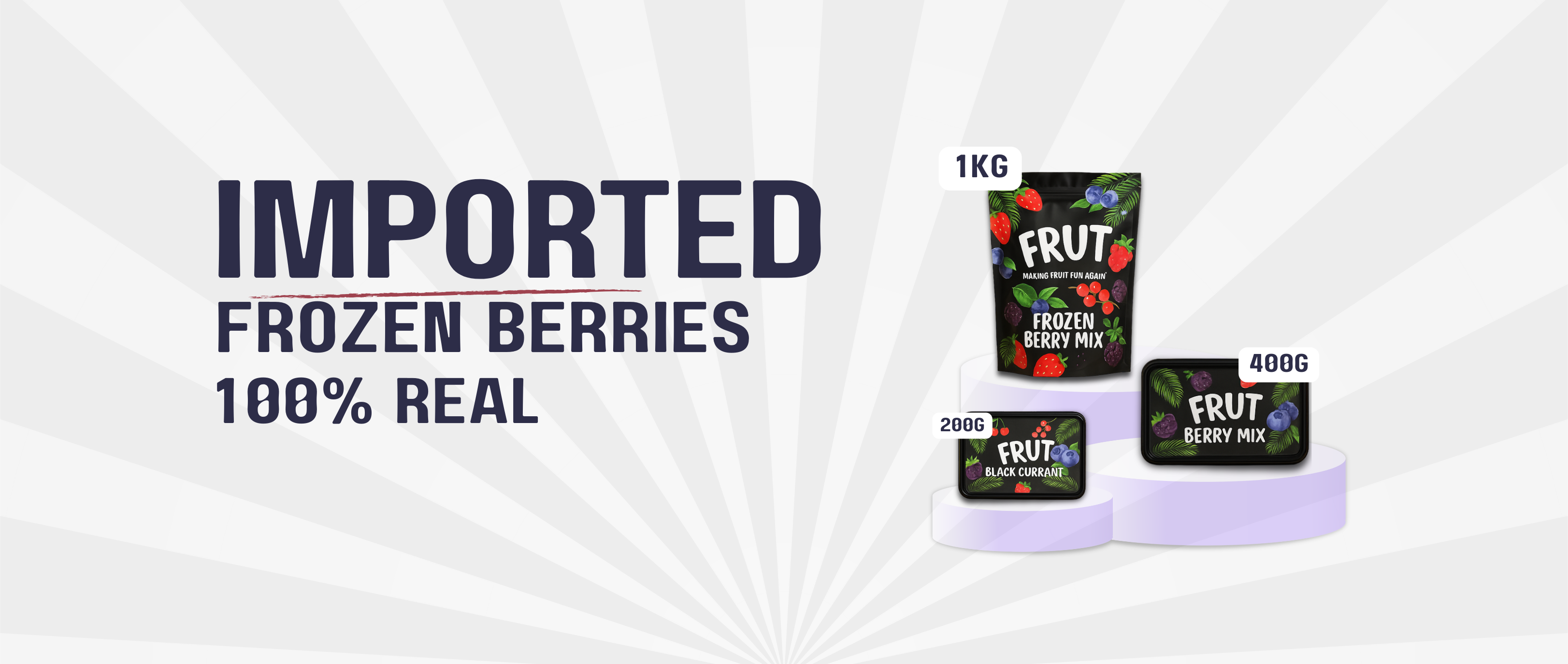
Blackberries → Gut health powerhouse
So Where Does FRUT Fit Into This?
We’re not here to convince you frozen fruit is healthy.
Fruit is healthy. Full stop.
The real question is whether you’re eating enough of it — consistently.
And consistency is easier when the fruit:
-
Doesn’t spoil
-
Doesn’t need prep
-
Actually tastes like fruit
That’s why FRUT uses IQF.
No sugar.
No preservatives.
No additives.
Just fruit — frozen at its best.
If you already buy fresh fruit often and use it on time? Great.
If not? Frozen fruit may be your real fresh fruit.
Conclusion: So, Who Wins This Frozen Fruit vs Fresh Fruit Debate?
Neither. Both have a place. But if your goal is:
-
Eating more fruit
-
Saving time
-
Reducing waste
-
Getting consistent nutrition
Frozen fruit might actually be the smarter choice.
And now, you know why. Buy Now:




Share:
Does IQF Frozen Fruit Taste the Same as Fresh?
5 Reasons You Should Include Fruits in Your Daily Lifestyle (No Overthinking Required)