



10 Best Summer Fruits for Hydration
The sun's rays sap energy from you far quicker than you might think. In only twenty minutes out there, you return feeling completely drained. Staying hydrated helps, but it is usually not the full solution — it all depends on the food you consume alongside. Hydrating fruits can help replenish your fluid balance, provide electrolytes your body requires and do it in a much more enjoyable way than drinking water. Here is the list of the top ten fruits that are the most effective at replenishing your fluid levels and should be included in your diet during summer, along with their water percentage and the health benefits they offer.

Why Is It Vital to Maintain Hydration Balance? — Summer in Particular
It's quite common knowledge that dehydration is dangerous to your health, especially when experienced to a severe degree. Yet few are aware of its speed and widespread effects, even with mild degrees of dehydration.
As little as 1-2% water loss will impair cognitive functions, reducing your concentration and reaction time, while 3-4% can cause a decline in your physical performance. Dehydration leads to headaches and dizziness, and severe dehydration can result in heat exhaustion.
Summer increases each of these risks. The warmer temperatures result in increased sweating for your body to regulate itself. Whether you’re engaging in physical activity, travelling, or just lounging in an un-air-conditioned room, you may be losing more fluids than you realise. Drinking eight glasses of water daily isn’t the limit, but it is more like a minimum requirement, and it doesn’t account for a source of fluids that you can easily enjoy.
How Fruits Help with Hydration
However, fruits are not merely a source of sustenance. Fruits can be considered as structures designed for the transport of water in the body. In other words, when a person eats an apple, a strawberry, or any other fruit, he or she consumes about 80-95% of water. However, fruit water contains additional substances such as minerals, natural sugars, and fibre.
To understand how fruit water differs from ordinary water, it should be noted that hydration depends not only on the intake of a liquid substance but also on its retention in the body. Thus, minerals such as potassium, magnesium, and sodium play the key role since they stimulate the process of retaining moisture in cells. It means that by consuming fruit, a person receives water, which is better absorbed due to the presence of minerals necessary for the process.
Moreover, the presence of soluble fibre can also facilitate the process of hydration because the fiber stimulates gradual absorption of water. Finally, fruits contain antioxidants and vitamins necessary for maintaining the integrity of the skin.
The 10 Best Summer Fruits for Hydration
1. Watermelon — 92% Water
Every list that talks about hydrating fruits begins with the same one. Watermelons consist of 92% of water, making them the most hydrating whole fruit available out there. One typical serving of two cups offers about 170ml of water along with lycopene, vitamin C, and a healthy amount of potassium.
It's also quite light in terms of calories, offering around 46 calories per cup. It's one of those few foods where you don't have to worry about eating them excessively due to their relatively low calorific content. You can either blend them into a slush or even consume them frozen as it provides a long-lasting cooling experience.
Hydration trick: Always eat watermelon when chilled rather than at room temperature because it keeps your core body temperature cool while you consume it.
2. Strawberries — 91% Water
Strawberries have a water content of 91% and pack a lot of nutritional value. A cup of these fruits gives you all the recommended intake of vitamin C for the day, together with folate, manganese, and antioxidants beneficial for the heart.
The fruit is arguably the most adaptable in any home setting, because although the fresh strawberries look great when in season, they bruise easily and spoil quickly. The IQF strawberries are frozen during their peak ripeness, thereby maintaining their moisture levels and high levels of nutrients, including vitamins and minerals, without adding any preservatives or sugar.
All it takes is a few seconds to thaw, and you get the same hydration from them just as with fresh strawberries. This is what FRUT’s frozen strawberries are all about.

3. Cucumber — 96% Water
Cucumber technically counts as a fruit in botany, but its high percentage of water — more than any other food item in this article at 96% — is what makes it so refreshing and hydrating. You can enjoy it by adding cucumber slices to your water, combining them in a fruit salad, or even eating them with other foods.
4. Mango – 83% Water
While mango doesn't make the top of the charts when it comes to water content compared to watermelon or strawberries, it scores well because of its dense nutrient content. At 83% water, mangoes are high in vitamin A and vitamin C and contain a special type of fibre called prebiotic fibre that helps with proper absorption of nutrients.
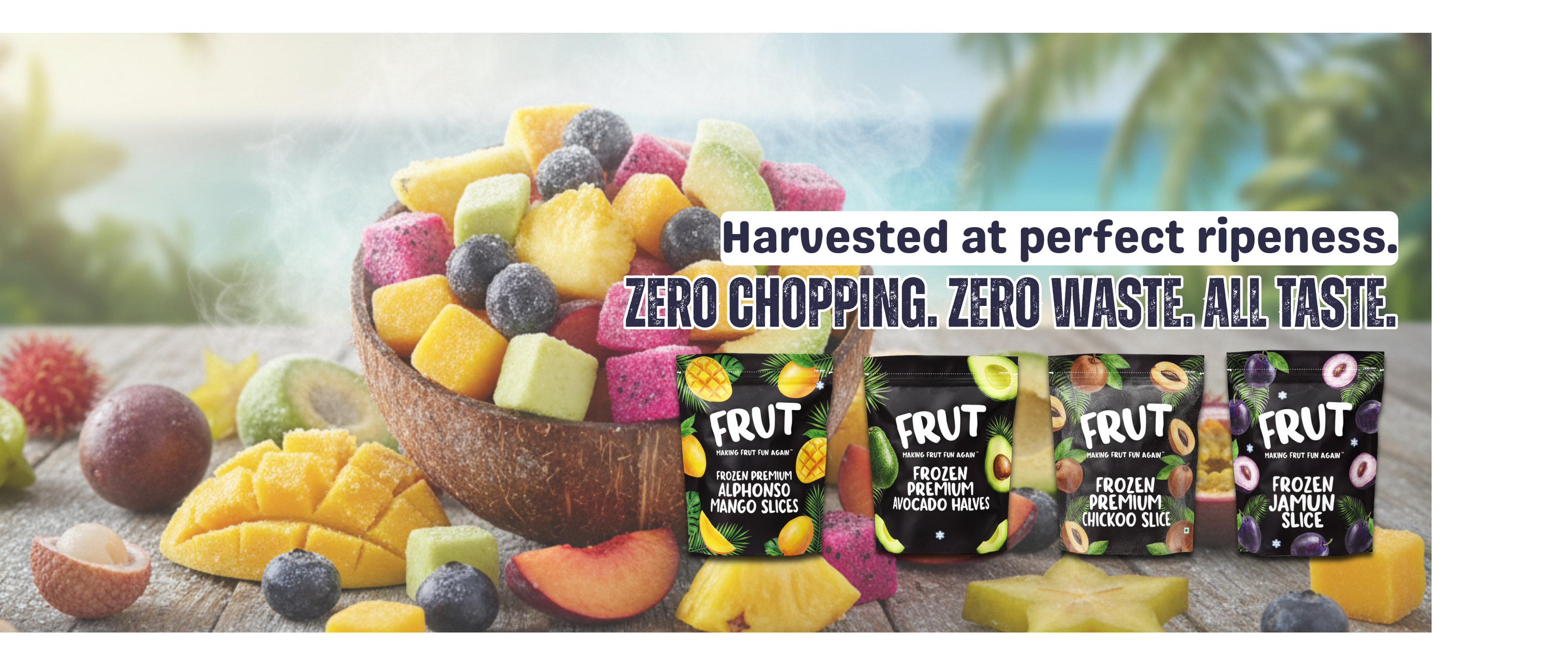
The specific variety of mango to look for is Alphonso; these mangoes have a higher moisture content and better taste compared to other types of mangoes. When it's not mango season, you can use IQF frozen Alphonso mango slices. These retain all the moisture of fresh mangoes.
5. Peaches — 89% Water
Being mostly water, peaches account for up to 89% of water while boasting a soft and juicy flesh. In addition, they are rich in vitamin C, potassium and a reasonable fibre content. Naturally sweet, their taste usually does not require any additions in case you plan to make smoothies.
6. Oranges — 86% Water
Electrolytes in oranges are ideal for maintaining hydration. Being 86% water, one large orange will give you up to 130 mg of potassium and 70 mg of vitamin C. Potassium regulates fluid balance within the cells; thus, it is perfect for compensating water losses due to sweating on hot days.
In addition, they have a high amount of pectin – water-soluble fibres, which allows fruit hydration to be different from pure water intake.
7. Pineapple — 86% Water
Pineapples contain about 86% of water; however, they distinguish themselves by having bromelain, an enzyme responsible for breaking protein molecules. In addition to hydrating your body, pineapple can help reduce inflammation and promote healthy digestive processes. Since summer is the time when digestion slows down because of the heat, it's an important factor.
Besides, it is sharp and tropical, and it mixes well with frozen mango or coconut water.
8. Blueberries — 84% Water
Blueberries are made up of 84% water and are considered one of the richest sources of antioxidants. Anthocyanins, which give these berries their characteristic blue colour, have been linked with improved cardiovascular health, decreased oxidation, and improved cognitive functioning under conditions of heat stress.
Frozen blueberries, or IQF, can be considered just as rich in antioxidants as fresh ones because the process of freezing stops any further oxidative damage. Simply adding a few blueberries to a smoothie, yoghurt, or oatmeal will help you achieve your daily water intake easily.

9. Raspberries — 87% Water
Raspberries are 87% water. They have one of the highest concentrations of fibre in fruit; they contain roughly 8 grams of fibre per cup. Since it takes longer for fibre to absorb fluids in the body, these fruits can provide prolonged hydrating effects on a warm day.
The slightly sour taste of frozen raspberries combines perfectly with sweet frozen fruits, such as mangoes or strawberries.
10. Papaya — 88% Water
Papaya comes last on this list with 88% water and rich amounts of vitamin C, folic acid, and potassium. Additionally, there is a compound known as papain, which is a digestive enzyme that works similarly to bromelain in pineapples. This fruit can be consumed alone or as a smoothie for breakfast due to its mild sweetness.
Water Content at a Glance
|
Fruit |
Water Content |
Key Nutrient |
|
Cucumber |
96% |
Silica, Vitamin K |
|
Watermelon |
92% |
Lycopene, Potassium |
|
Strawberries |
91% |
Vitamin C, Folate |
|
Raspberries |
87% |
Fibre, Vitamin C |
|
Peaches |
89% |
Vitamin C, Potassium |
|
Papaya |
88% |
Vitamin C, Papain |
|
Oranges |
86% |
Potassium, Vitamin C |
|
Pineapple |
86% |
Bromelain, Manganese |
|
Blueberries |
84% |
Anthocyanins, Vitamin K |
|
Mango |
83% |
Vitamin A, Vitamin C |
Fresh vs. Frozen: Does It Affect Hydration?
This is a question worth addressing directly, because a lot of people assume fresh always means better. It doesn't — not reliably.
Fresh fruit is excellent when it's genuinely fresh: picked within days and stored properly. The problem is that most supermarket fruit travels for days or weeks before it reaches your kitchen. During that time, moisture evaporates, nutrients degrade, and the actual hydrating value of the fruit decreases.
IQF frozen fruit is processed immediately after harvest, at peak ripeness. The individual quick-freezing method (IQF) freezes each piece separately rather than in a block, which preserves the cellular structure and water content far better than conventional freezing. When you thaw IQF strawberries or mango, you get a nutritionally comparable fruit — often superior — to what you'd buy fresh off-season.
For regular summer hydration, this means you can use a mix. Eat fresh fruit when it's genuinely in season and locally sourced. Keep a stock of high-quality IQF frozen fruit for everything else — smoothies, smoothie bowls, chilled blends, or simply thawing and eating. The hydration benefit is preserved either way.
How to Build a Hydrating Summer Fruit Routine
It is just as important to know what kinds of fruits contain plenty of water; it is also important to know how to take advantage of this knowledge. Morning: Begin the day with fruit smoothies made from at least two fruits that contain a lot of water. For instance, a combination of frozen strawberry, mango, and banana mixed with coconut water can be done in less than three minutes and provides hydration before you've even started your day.
- Midday: Snack on fruits rather than any other foods. Watermelons or a couple of handfuls of berries will keep your body well hydrated throughout the day.
- Post exercise: Consume fruit that contains potassium, such as oranges, mangoes, and peaches, to restore the electrolytes in the body. This is often far better compared to many sports drinks, which are full of additives like artificial colours.
- Evening: Fruit salad consumed before bedtime will help maintain the level of hydration throughout the night.
The main point here is to be consistent because hydration is all about the accumulation of water throughout the day.
Conclusion:
Reasons why one should consume more fruits during summer are straightforward. The fruits contain 83–96 per cent of water, the minerals needed to maintain proper fluid balance within the body, and taste good when consumed. Irrespective of whether you pick watermelon from a fruit stall or blend IQF frozen strawberries in a morning smoothie or consume mangoes directly from the fridge, your body receives an advantage from that.
Staying hydrated does not have to be a difficult task; rather, it can be one of the most interesting aspects of daily routine.
Ready to build a hydrating fruit routine without the hassle of seasonal availability or daily fresh shopping? Explore FRUT's range of IQF frozen fruits — harvested at peak ripeness, no preservatives, no added sugar, and ready whenever you are. Shop FRUT Frozen Fruits →






Share:
8 Health Benefits of Eating Frozen Sweet Cherries You Should Know
Frozen Acai Berries vs Fresh Acai Berries: What Is Good for You?