

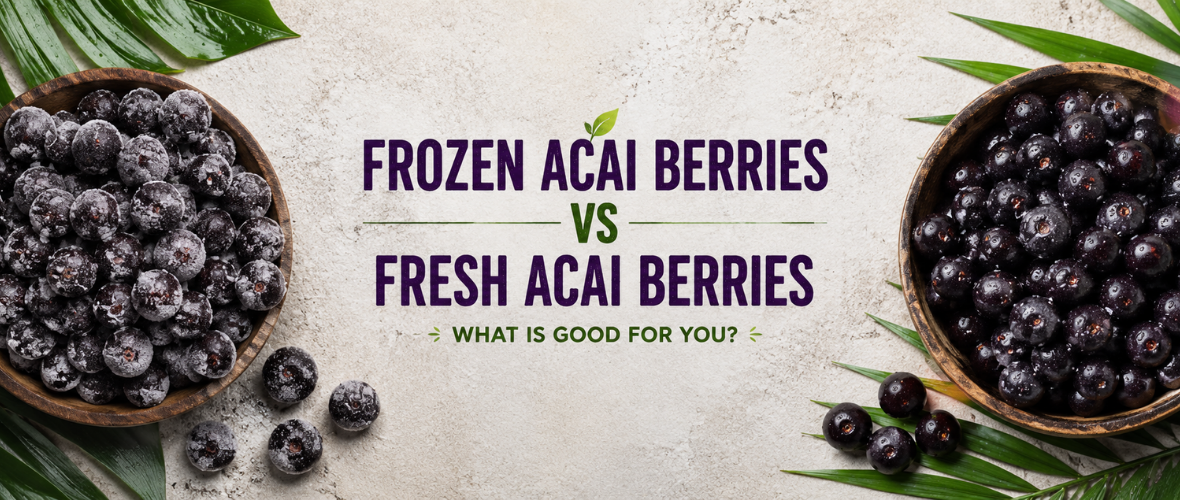
Frozen Acai Berries vs Fresh Acai Berries: What Is Good for You?

If you've ever stood in a health food aisle looking at a bag of frozen acai pulp and wondered if it's as good as the "real thing," you're not alone. Acai has transformed from a secret of the Amazon rainforest to a staple in smoothie bowls in less than two decades. With this rise in popularity comes an important question: frozen acai berries versus fresh acai berries, what is good, and does the difference matter for your health? The short answer is that both forms offer real nutritional value, but details about freshness, processing, and storage affect the overall picture more than most people realise. This guide breaks down the nutrients, the science, and the practical aspects of choosing between the two.
Why Are Acai Berries Good in the First Place?
Before comparing frozen and fresh versions, it helps to understand why acai berries are considered a superfood. Native to the floodplains of the Amazon basin, the acai palm produces small, dark purple berries that consist mostly of pit and skin, with very little pulp. That thin layer of pulp is packed with plant compounds that have attracted the interest of nutrition researchers for years.
Acai berries are high in anthocyanins, the same pigment-based antioxidants found in blueberries and dark grapes, though acai generally contains them in much higher amounts. They also provide healthy fats, dietary fibre, and modest amounts of vitamins and minerals, including vitamin A, calcium, and iron. This mix is why fitness enthusiasts, food lovers, and anyone looking for a cleaner diet keep returning to acai as a useful ingredient rather than just a trendy topping.
A Quick Acai Berry Nutritional Snapshot
A typical 100-gram serving of acai pulp (unsweetened) generally provides:
- Roughly 70–90 calories
- 4–5 grams of fibre
- 4–6 grams of healthy fats, largely monounsaturated
- A high antioxidant load, often measured in ORAC units, is well above that of many common fruits.
Frozen Acai Berries vs Fresh Acai Berries: What Is Good, Nutritionally Speaking?

These numbers can shift slightly depending on ripeness, growing conditions, and how the fruit was handled after harvest — which brings us to the real heart of this comparison.
Here's the part that surprises most people. Since acai grows mainly in tropical regions like Brazil, truly fresh acai berries are hard to find outside that area. The fruit starts to oxidize and lose nutrients within 24 hours of being harvested. That’s why most acai consumed worldwide, whether in smoothie bowls, supplements, or juices, is frozen, pulped, or freeze-dried instead of sold fresh.
This isn't a disadvantage; it's a practical necessity. It changes how we should view the comparison. It’s not just about “fresh vs frozen” as we think of with apples or spinach. It’s more about how quickly the fruit gets processed after picking.
Antioxidant Levels: Frozen Acai Berry vs Fresh Acai Berry
Antioxidants, especially anthocyanins, are the main nutrients in acai, and this is where processing speed is crucial. Fresh acai berries eaten within hours of harvest in the Amazon region have the highest antioxidant concentration because they haven’t had time to oxidise.
However, a frozen acai berry pulp that is processed and flash-frozen shortly after harvest keeps most of its antioxidant content. Flash freezing stops enzyme breakdown almost immediately. This method locks in anthocyanins much better than air-drying or keeping it in the fridge for a long time. Research shows that quick freezing preserves antioxidant compounds better than several days of "fresh" transport and storage, which usually expose the fruit to heat, light, and oxygen—the three main threats to anthocyanins.
In practice, this means a well-processed frozen acai berry pack from a trustworthy source can match or even beat "fresh" acai that has spent days in transit before arriving at your bowl.
Fibre Content Comparison
The fibre content in frozen acai and properly processed fresh acai is mostly similar. Freezing does not significantly break down insoluble fibre like heat cooking or drying can. Both types usually provide 3–5 grams of fibre per 100-gram serving. This supports digestion and helps regulate blood sugar levels.
Freeze-dried acai powder is the exception worth noting. The dehydration process can concentrate fibre per gram, but the serving sizes are naturally smaller, so the overall fibre delivered per serving remains similar.
GI Index: How Frozen and Fresh Acai Compare
Acai berries, in either form, fall on the low end of the glycemic index, generally estimated between 25 and 35. Exact numbers vary since acai has not been studied as much as more common fruits. Freezing does not raise the GI index of the fruit. What affects the GI is added sugar. Many commercial frozen acai packs, particularly pre-sweetened smoothie packs, mix in juice concentrates or added sugars, increasing the glycemic load.
This distinction is crucial for anyone managing blood sugar or following a lower-GI diet. Unsweetened frozen acai pulp maintains a low GI profile, while flavored or sweetened versions can raise that number significantly.
Acai Berry Health Benefits Worth Knowing
No matter which form you choose, acai berries offer several proven benefits.
Heart and Cholesterol Support
The monounsaturated fats and plant sterols in acai have been linked to modest improvements in cholesterol ratios in small clinical studies, similar to the effects seen with olive oil and avocado.
Skin and Anti-Aging Support
Anthocyanins fight oxidative stress at the cellular level. This is part of why acai frequently appears in nutrition content related to skincare. While no fruit can replace sunscreen or a good skincare routine, reducing oxidative damage from the inside can help skin stay resilient over time.
Energy and Recovery for an Active Lifestyle
For fitness enthusiasts, acai’s mix of healthy fats and antioxidants makes it a popular choice after workouts. It won’t replace protein for muscle repair, but it can help reduce the oxidative stress that intense training puts on the body.
Digestive Health
Thanks to its fibre content, regular consumption of acai supports gut motility and complements a fibre-rich diet aimed at improving digestion.
How to Preserve Acai Berry Freshness and Nutrients

Since most people have frozen acai berry packs or pulp instead of whole fresh fruit, preservation comes down to careful handling rather than trying to "keep it fresh" in the usual way.
Storage Tips for Frozen Acai
- Keep it frozen consistently. Thawing and refreezing break down cell structure and speed up nutrient loss, especially antioxidants.
- Use airtight packaging. Exposure to oxygen is the main cause of degradation, so resealable freezer bags or vacuum-sealed pouches can extend shelf life significantly.
- Store away from strong smells. Acai pulp can take on flavours from other items in the freezer if not sealed properly.
- Use within 6–12 months for best nutrient retention, although frozen acai can be safe beyond that time.

If You Ever Get Genuinely Fresh Acai
For those lucky enough to access fresh acai berries directly—usually only in or near the Amazon region—consume or process them within 24 hours. Traditional preparation involves soaking the berries to soften the skin, then mashing and straining to separate the pulp from the seed. This process should be quick to prevent oxidation.
Frozen vs Fresh Acai: Which Should You Actually Choose?
For nearly everyone outside acai-growing areas, frozen acai berry products are not only the practical choice but often the healthier one too. High-quality frozen acai berry pulp from a brand that flash-freezes soon after harvest provides antioxidants, fibre, and healthy fats in amounts very close to what you get from fresh fruit.
The key factor to consider isn’t just "frozen vs fresh." It’s more about processing quality and added ingredients. Checking labels for added sugars, looking for "flash-frozen" or "unsweetened" claims, and choosing reputable brands is much more important than chasing an unrealistic standard of fresh fruit.
Final Thoughts
In the context of frozen acai berries versus fresh acai berries, what is good will depend much less on the word "fresh" on the product’s packaging and much more on the process speed and care that the fruit underwent right after harvesting. When it comes to freezing acai, particularly when it comes to flash freezing and unsweetened acai, the frozen acai stands shoulder to shoulder with fresh fruit when it comes to antioxidant content, fiber, and general healthfulness. So, when you’re considering acai, think less about whether it’s frozen or fresh and concentrate on the quality of the product. Looking to add an acai recipe to your daily routine? Check out our line of flash-frozen and unsweetened acai berries.






Share:
10 Best Summer Fruits for Hydration
Are Frozen Cranberries Good for You? A Complete, Evidence-Based Guide