


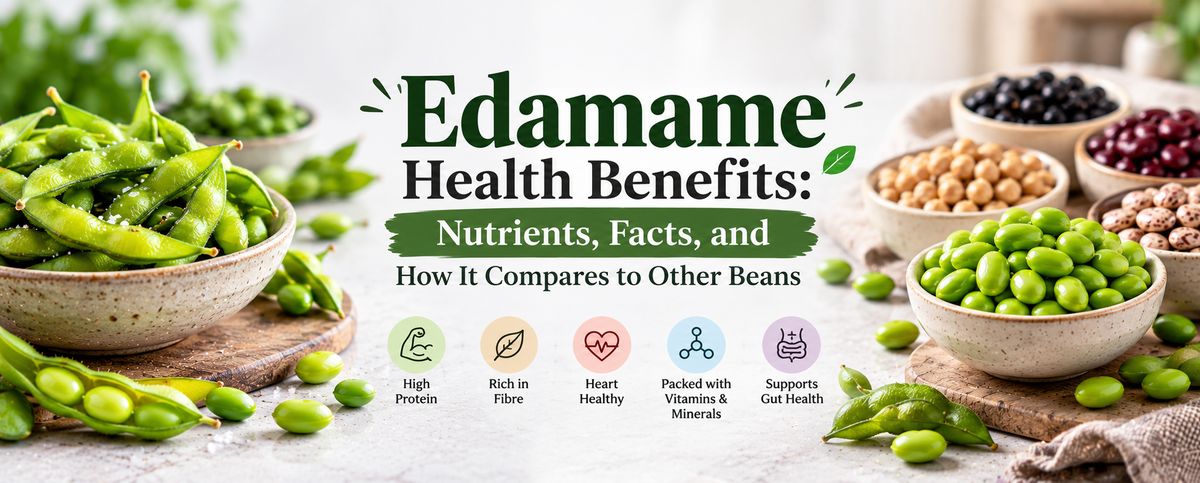
Edamame Health Benefits: Nutrients, Facts, and How It Compares to Other Beans
What Is Edamame?
The name edamame refers to young, green soybeans which are harvested before they have the opportunity to mature and dry out on the plant. They are typically found still inside their soft, fuzzy green pods and are boiled or steamed before being lightly salted — making them a snack that is now a common item on sushi menus and, more and more so, in home kitchens seeking a quick supply of plant protein. Unlike the pale and hard soybeans used in making tofu, soy milk, or soybean oil, edamame is picked when it is still tender, giving it a mildly sweet, grassy taste and a firmer texture. For people who are designing their diet around clean and whole-food protein sources, knowing the health benefits of edamame is a useful first step since this single legume contains protein, fiber, and a wide variety of vitamins and minerals with very little processing.

Nutrient Facts of Edamame: What's Actually in a Serving
Before considering the effects that edamame has on the body, it is useful to look at exactly what it contains. A portion of 100 grams of shelled, cooked edamame (about ¾ cup) contains approximately:
- Calories: 121–124 kcal
- Protein: 11–12 g
- Carbohydrates: 9 g
- Dietary fiber: 5–8 g
- Fat: 5 g (mostly unsaturated)
- Folate: around 311 mcg (a very high percentage of daily needs)
- Vitamin K: roughly 27 mcg
- Manganese: about 1 mg
- Iron: approximately 2.3 mg
- Magnesium: around 64 mg
- Potassium: about 436 mg
- Calcium: roughly 63 mg
At once the balance stands out. Edamame is not merely a source of protein; it is a legume that provides substantial amounts of fibre, folate, and a number of trace minerals in one meal, all while remaining relatively low in calories. When you compare it with many of the popular protein snacks, which are generally high in one nutrient and lacking in all the others, edamame begins to appear as one of the more well-rounded choices available on the shelf.
Where the Calories Come From
The calories in edamame are roughly divided into three parts: approximately 37% coming from protein, 36% from fat, and the rest from carbohydrates. In addition to the main figures, one cup also contains significant amounts of vitamin C, magnesium, thiamin, riboflavin, manganese, zinc, copper, phosphorus, and choline. This is an unusually wide range of micronutrients for a food that begins as a simple green bean, which is one of the reasons why edamame continues to appear on "clean eating" and whole-food protein lists.
There's an opportunity in terms of an arrangement featuring edamame pods alongside a small bowl of shelled beans on a wooden board. The suggested alternative text is "edamame pods and shelled beans showing nutrient-dense whole food".
Edamame Health Benefits Worth Knowing
A Complete Plant Protein
A major health advantage of edamame—particularly for those who are reducing their meat intake or merely looking to vary their protein sources—is the fact that it is a complete protein. This means it includes all nine essential amino acids, which the body is unable to make by itself—a trait that is rare among plant foods, since the majority of them are missing one or more of these. For vegetarians, vegans, or anyone adopting a more plant-based diet, edamame is therefore well worth having in the freezer.
Supports Steady Blood Sugar
Edamame has a low glycemic index since its fiber and protein content act together to slow down digestion. Foods that are digested in this manner tend to help keep blood sugar levels more stable and in check, reducing hunger for a longer period of time – a point which is important for people who are managing their blood sugar or for those who simply want to avoid the energy dip in the mid-morning that results from eating carbohydrates that digest more quickly.
Helps with Satiety and Weight Management
Edamame is an excellent option when it comes to weight control because it contains a good amount of plant-based protein, fiber, and healthy fats—this combination helps keep you satisfied on a low number of calories. It's more difficult to find than it may appear. Many high-protein snacks omit fiber, and many high-fiber snacks omit protein as well. The fact that edamame fulfills both of these criteria is one of the main reasons it has become a favourite snack for people who are watching their calorie intake and don't want to feel hungry one hour later.
Bone and Blood Health Support
The vitamin K in edamame has a direct effect on blood clotting and bone metabolism, and the calcium and manganese it contains help to improve bone density over time. Furthermore, the B vitamins in it assist the body in converting food into usable energy, thus completing its contribution to normal metabolic functions. Although this does not mean that edamame can take the place of a balanced diet, it does provide nutrients which it is genuinely difficult to consume in excess through food alone.
A Source of Antioxidants
Soybeans, such as the young green kind used in edamame, contain isoflavones—plant compounds which have antioxidant properties and have been investigated for their possible role in promoting heart health and maintaining hormone balance. In fact, this is one of the areas of soy nutrition that has been most extensively researched, and although the science surrounding isoflavones is still developing, edamame is still one of the least processed methods of obtaining them.
Gut-Friendly Fiber
Edamame contains between 5 and 8 grams of fibre per 100-gram serving and thus helps to ensure regular digestion while also providing food for the beneficial bacteria in the gut. Those individuals who have difficulty meeting their daily fibre intake just by eating vegetables can fill a significant portion of their fibre gap in one meal by having a cup of edamame.

Edamame vs. Dry Soybean: What Changes When the Bean Matures
Edamame and dry soybeans are obtained from the same plant, the only difference being the time at which they are harvested. Edamame is picked early, when the beans are still soft, green, and immature, whereas the dry soybeans remain on the plant until they have fully matured and have lost most of their moisture, a process that considerably concentrates their nutrients.
Protein and Calorie Differences
Dry roasted soybeans have a significantly higher protein content—amounting to 39 to 43 grams per 100 grams, as opposed to the 11 to 12 grams found in edamame. The same thing is true of the calories: dry soybeans contain about 449 per 100 grams, while edamame has about 121. This difference does not mean that dry soybeans are in any way inherently superior; it is merely due to the fact that removing the water concentrates all the components, including both protein and calories.
Fiber and Fat
Dry soybeans have more fat and fiber on a gram-by-gram basis because there is less water to dilute the composition. Nevertheless, the fat content of edamame is still significant in relation to its calorie content, and its fiber-to-calorie ratio is probably more effective for someone who is watching their portion sizes.
What Should You Choose?
If you'd like a snack or side dish that is lower in calories and higher in water content and which is easy to portion and eat directly from the pod, then go for edamame.
If you want to maximize the protein content in a small amount of food, such as when cooking or baking, then select dry soybeans (or products made from them, for example, tofu, tempeh, or soy flour).
In practice, there is no need for most people to choose one or the other since the two have different functions. Edamame is suitable to be eaten as a snack or as a side dish; dry soybeans and their derivatives are more often used as a cooking ingredient or as a source of protein for other dishes.
Edamame vs. Indian Broad Bean (Avarakai): A Regional Comparison
For people in India or those who know something about South Indian cooking, avarakai — alternatively called Indian broad bean, hyacinth bean, val papdi, or sem, according to the region — provides a natural point of comparison. Even though both edamame and avarakai are green legumes that are eaten in the pod stage, they originate from completely different plants: edamame comes from Glycine max (soybean) and avarakai from Lablab purpureus (hyacinth bean).
Nutritional Differences
Avarekai is naturally low in saturated fat, cholesterol, and sodium, and at the same time provides a good amount of protein, phosphorus, potassium, zinc, copper, magnesium, and manganese; this is very similar to the nutrient profile of edamame, although edamame generally has a higher content of raw protein per serving because soybeans as a whole are more protein-dense than most other legumes.
Avarakai also has its own advantages, offering a good amount of protein, fiber, and the vitamins A and C, together with potassium and iron. Edamame, on the other hand, is a better source of folate and vitamin K, as well as having a slightly higher protein content as a proportion of the whole. Avarakai does stand up well in terms of its vitamin A and vitamin C content—fresh, young pods contain especially high levels of these vitamins, vitamin C in particular helping with wound healing and tissue repair because it is a water-soluble antioxidant. Edamame does not reach the same level of vitamin C, so if you eat avarakai regularly, you'll be getting a nutrient that edamame does not place as much emphasis on.
Difference in Cooking Methods
Indians generally cook broad beans by boiling, steaming, or sautéing and use it mostly as an ingredient in curries and stir-fries. Avarakai is hardly ever consumed raw and is almost always cooked in some form or another, unlike edamame, which is usually consumed raw after being boiled or steamed.
Which Is the Better Option?
There is no better option, as neither bean is healthier overall because they just have their own strengths. For maximum plant protein in a meal, edamame is the better choice, but for a good combination of vitamins A and C in addition to plant protein and fiber, avarakai is equally healthy and is preferred if you like to cook your legumes into traditional meals.
People living in South India are already familiar with both kinds of beans without knowing about the nutritional value of both of them being pretty much identical.
How to Add More Edamame to Your Diet
Edamame can be used in meals quite easily due to its sweet and mild taste. Some useful suggestions are:
For a snack: Simply steam the frozen pods for five minutes, sprinkle sea salt over them, and eat raw.
In salads: Adding shelled edamame to grain salads or green salads will add to the protein content of salads.
Edamame hummus: Shelled edamame can be added to hummus with a bit of garlic, lemon, and olive oil to make hummus.
In stir-fries: Shelled edamame can be added to vegetable or noodle stir-fry at the end of cooking.
In soups: Shelled edamame can be added to miso soup or vegetable broths.
Frozen edamame is pre-cooked before being packed and hence cooks really fast and even freezes nicely.









Share:
Blueberry Filling vs Blueberry Jam: What's the Difference?