
What Is the Difference Between Preserve, Jam, and Spread? A Plain-English Guide
Walk down any breakfast aisle, and you will find jars that look almost identical: red, glossy, fruity, and labelled with three different words. So what is the difference between preserve, jam, and spread? It comes down to how much fruit goes in, how that fruit is cut, and how much sugar holds it all together. Preserves keep the fruit in large pieces or whole. Jam uses crushed or chopped fruit cooked into a soft, spoonable set. Spread is a looser, often lower-sugar category that can be anything from fruit-forward to mostly sweetener. This guide breaks down each one, shows you how to read a label, and explains how to find jars made with real fruit chunks.

What Is Preserves?
Preserves are the chunkiest of the three. The idea is in the name: fruit is preserved in its most recognisable form, either whole (like small berries or cherries) or in large, distinct pieces (like apricot halves or strawberry quarters), suspended in a soft syrup or lightly set jelly.
How are preserves made?
The fruit is cooked gently with sugar, and often a little lemon juice and pectin, just long enough for the syrup to thicken without turning the fruit to mush. Many makers let the fruit rest in sugar before cooking so the pieces firm up and hold their shape.
What preserves taste and feel like
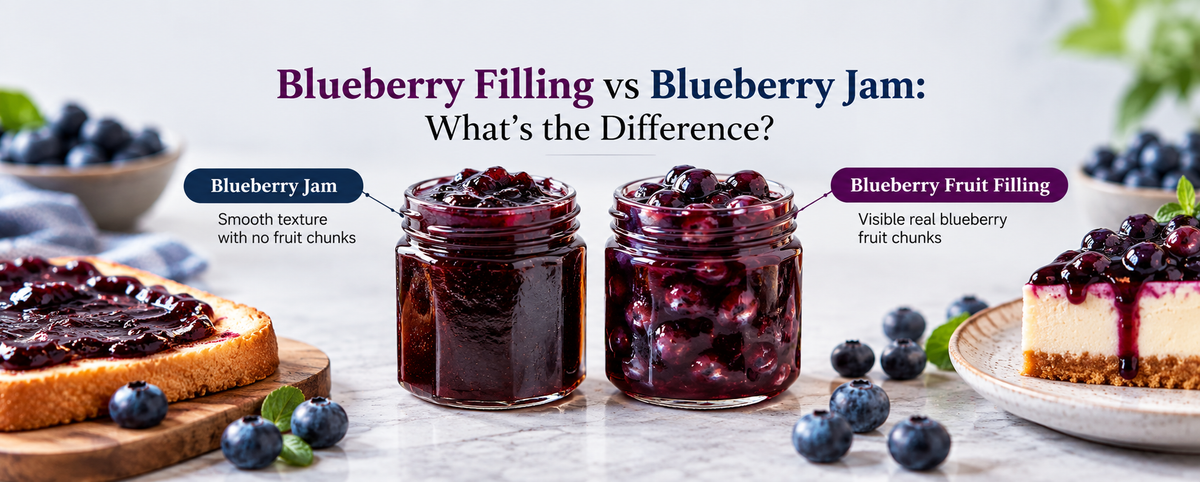
Expect a spoonful that is part fruit, part syrup. You will see and chew actual pieces. The flavour is usually brighter and more distinctly "fruit" than a smooth jam because the pieces have not been broken down. This is why preserves are often the first pick for people who want real fruit chunks in the jar.
Best uses for preserves
Spooned over yoghurt or ice cream, layered on scones, served on a cheese board, or used as a glaze for roasted meats. Because the pieces are large, they also work well as a tart or thumbprint cookie filling.

What Is Jam?
Jam is what most people picture when they think of fruit on toast. It is made from crushed, mashed or finely chopped fruit cooked with sugar until it sets into a thick, spreadable, even texture.
How jam is made
The fruit is broken down, then boiled with sugar and pectin (a natural gelling fibre found in fruit, especially citrus peel, apples and berries). Heat and sugar draw out moisture and activate the pectin, which gives jam its characteristic set. Fruits that are naturally low in pectin, such as strawberries and peaches, often get a little extra help from added pectin or lemon juice.
What jam tastes and feels like
Jam is smoother and more uniform than preserves. You may still find small bits or seeds (think raspberry or blackberry), but there are no large pieces. It spreads easily, which is why it is the everyday staple for sandwiches and toast.
Best uses for jam
Toast, peanut butter sandwiches, pastry fillings, swirling into porridge, and sweetening sauces or dressings. Its even texture makes it the most versatile of the three in baking.
What Is Spread?
Here is where things get fuzzier, and it is worth knowing why. "Spread" is not as tightly defined as jam or preserves in many markets. In practice, a fruit spread is a spreadable fruit product that does not follow the traditional sugar-and-fruit recipe of a jam or preserve.
What makes a product a spread
Spreads often fall into one of a few groups:
- Reduced-sugar spreads. These use less sugar than traditional jam, sometimes balanced with extra pectin or other thickeners to still set properly.
- Fruit-sweetened spreads. Instead of refined sugar, these rely on fruit juice concentrate, such as grape or apple, for sweetness.
- Sugar-free or sweetener-based spreads. These may use alternative sweeteners.
- Low-fruit products. Some spreads contain far less fruit than you would expect, padded with sweeteners, water and thickeners.
That last point is why you should never assume a spread is automatically healthier or fruitier. Some are excellent, made with a high proportion of real fruit and little added sugar. Others are mostly sweetener and colour. The word "spread" tells you about texture, not quality.
Best uses for spread
Everyday toast, sandwiches and breakfast bowls, particularly for people who want to cut back on sugar. The texture is typically soft and easy to spread straight from the fridge.
Side-by-Side Comparison
|
Preserves |
Jam |
Spread |
|
|
Fruit form |
Whole fruit or large chunks |
Crushed or finely chopped |
Varies: chunks, puree or pulp |
|
Texture |
Chunky, syrupy |
Thick, uniform, soft set |
Soft, smooth, sometimes loose |
|
Sugar level |
Traditionally high |
Traditionally high |
Often reduced, but varies widely |
|
Defined by rules? |
Usually yes, in many markets |
Usually yes, in many markets |
Often less strictly defined |
|
Best for |
Cheese boards, yoghurt, desserts |
Toast, sandwiches, baking |
Everyday use, lower-sugar diets |

Which One Has the Most Real Fruit?
If your priority is eating something that looks and tastes like actual fruit, preserves are generally your best bet because the fruit is left in large, visible pieces. Jam still contains plenty of fruit, but in a broken-down form. Spreads are the wild card: the best ones can have a high fruit content, but the category is loose enough that a spread can legally contain less fruit than you would hope.
Why fruit content matters
Higher fruit content usually means more flavour, more natural fruit fibre and often less need for extra sugar to carry the taste. In some countries, traditional jam and preserve standards set a minimum fruit-to-sugar ratio. In the United States, for example, a product sold as jam or preserves is generally expected to contain about 45 parts fruit to 55 parts sugar. Rules vary by country, so check which ones apply where you shop. A spread may sit outside those requirements, which is why reading the label matters.
How to Read the Label
Labels are where the real differences show up. Here is what to look for.
Start with the ingredient list
Ingredients are listed from most to least by weight. If fruit is first, that is a good sign. If sugar, glucose syrup or fructose syrup comes first, you are buying something closer to sweet gel than fruit. Look for short, recognisable lists: fruit, sugar, lemon juice, pectin.
Check for the "fruit per 100g" figure
Some brands state how much fruit was used to make 100g of the product. A higher number generally means a fruitier jar. Do not confuse it with the actual fruit remaining after cooking, since water evaporates during the process.
Look at sugar per serving
Compare the sugar content per tablespoon across jars. Traditional jams and preserves tend to be sweeter, while reduced-sugar spreads may be noticeably lower. Remember that "no added sugar" does not always mean low sugar if fruit juice concentrate is doing the sweetening.
Watch for extras
Artificial colours, flavourings, thickeners beyond pectin and preservatives are not automatically bad, but a jar of real fruit rarely needs a long list of them.
Check the texture cues
Words like "chunky," "whole fruit," "with pieces" and "rustic" point toward preserves or chunkier jams. Words like "smooth," "seedless" or "classic" suggest a more uniform texture.
Related Terms: Jelly, Marmalade, Conserve and Compote
These words often get mixed up with the main three, so here is a quick guide.
- Jelly: Made from fruit juice rather than the fruit itself, so it is clear, smooth and has no chunks.
- Marmalade: A citrus-based preserve that includes peel, giving it that signature bittersweet edge.
- Conserve: A preserve made with a mix of fruits and often nuts or dried fruit.
- Compote: Fruit cooked gently in syrup, usually meant to be eaten soon rather than stored for months.
- Fruit butter: Fruit cooked down to a thick, smooth, spoonable puree, like apple butter.
How to Choose a Healthier Jar
You can absolutely choose better ones. A few simple guidelines:
- Pick fruit first. The fruit should be the first ingredient, not sugar.
- Go for chunkier textures. Preserves and chunky jams tend to contain more intact fruit.
- Compare sugar per serving, not just the front-of-pack claims. "Natural" and "no added sugar" can be misleading.
- Keep the ingredient list short. Fewer additives usually mean a more straightforward product.
- Watch portion size. Even the best jar is still concentrated fruit and sugar. A tablespoon or two goes a long way.
-
Consider making your own. Home cooks can control sugar levels and fruit content directly, and small-batch jars use very few ingredients.
Frequently Asked Questions
Is preserve the same as jam?
Not quite. Jam is made from crushed or chopped fruit and has a uniform, soft texture. Preserves keep the fruit whole or in large chunks, so the result is chunkier and often more syrupy.
Is fruit spread healthier than jam?
Sometimes. Many spreads contain less sugar, but the term is loosely defined, so some contain very little fruit. Always compare ingredient lists and sugar content rather than relying on the word "spread."
Which is made from real fruit chunks: preserve, jam or spread?
Preserves are the most reliable choice for visible fruit chunks. Some chunky jams and fruit spreads also contain pieces, so look for terms like "whole fruit" or "with pieces" and check that fruit leads the ingredient list.
Do preserves, jam and spread need to be refrigerated?
Unopened, properly sealed jars are usually shelf-stable. Once opened, refrigerate them and follow the storage guidance on the label. Lower-sugar spreads often spoil faster, so they especially need the fridge.
Conclusion
So, what is the difference between preserve, jam, and spread? Preserves are chunky and fruit-forward, jam is smooth and evenly set, and spread is a flexible category that depends entirely on the brand behind it. If you want real fruit chunks, look for preserves or jars labelled "whole fruit," and let the ingredient list, not the front label, make the final call. A short ingredient list, fruit as the first item and a sensible sugar level will steer you toward the best jar. Ready to taste the difference for yourself?
CLICK HERE - To Explore Premium Fruit FIllings

Share:
How to Buy the Best and Healthiest Frozen Fruits