

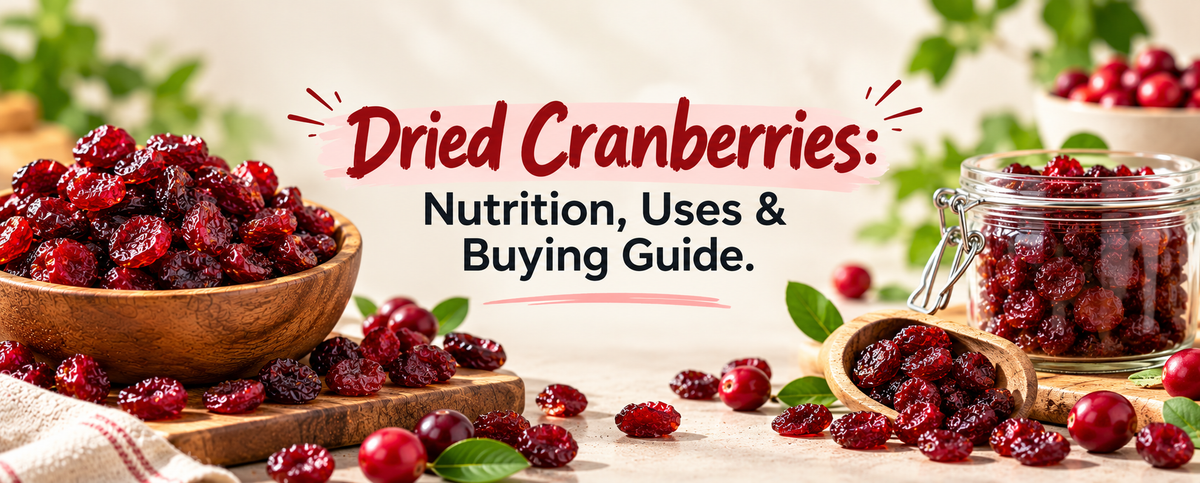
Dried Cranberries: Nutrition, Uses & Buying Guide
Dried cranberries have a knack for making healthy snacking feel less like a compromise — that tart-sweet chew is genuinely satisfying, and it's a lot easier to reach for a handful of dried berries than to talk yourself out of a candy bar. But cranberries are unusual among dried fruits: fresh, they're almost too sour to eat plain, which means the dried version almost always involves some form of sweetening, and that changes the nutrition picture more than most people realize. This guide breaks down what's actually in dried cranberries, how they compare to fresh cranberries, what separates a good-quality product from a mediocre one, and how to store a bulk supply so it stays fresh for months rather than weeks.

What Are Dried Cranberries?
Dried cranberries are fresh cranberries that have been dried down to remove most of their water content, typically through a combination of steam-blanching, sugar infusion, and hot-air or vacuum drying. Unlike blueberries or raisins, cranberries are naturally very tart and low in sugar on their own, so most commercial dried cranberries go through a sweetening step before drying to make them palatable as a snack. This is a meaningful difference from other dried berries, and it's worth understanding before you assume dried cranberries behave the same way nutritionally as, say, dried blueberries or raisins.
Dried Cranberries Nutrition: What's in a Serving
Typical Nutrient Breakdown (Sweetened, per 100g)
Most commercially available dried cranberries are sweetened, and their nutrition profile reflects that clearly:
- Calories: Approximately 300–330 kcal
- Carbohydrates: Around 76–83g
- Total sugar: Roughly 65–73g, a significant portion of which is added sugar rather than the fruit's own natural sugar
- Dietary fiber: About 5–6g
- Protein: Minimal, generally under 0.5g
- Fat: Near 0–1.4g, depending on the brand
Typical Nutrient Breakdown (Unsweetened, per 100g)
Unsweetened dried cranberries are harder to find but offer a meaningfully different profile — lower in total sugar, since there's no added sucrose, though still concentrated compared to the fresh fruit. They tend to taste noticeably tarter and more astringent, closer to the natural flavor of the cranberry itself, and are generally the better choice for anyone actively limiting added sugar intake.
Vitamins and Antioxidants
Dried cranberries retain a useful amount of vitamin E and vitamin K, along with smaller amounts of B vitamins and trace minerals like copper and manganese. They also carry proanthocyanidins, a class of antioxidant compounds cranberries are particularly well known for, which have been studied for their potential role in supporting urinary tract health. Much of the vitamin C content found in fresh cranberries, however, is lost during the drying and sweetening process, since vitamin C is sensitive to heat and processing.
Dried Cranberries vs Fresh Cranberries: What Actually Changes
Cranberries go through more transformation during drying than most other berries, largely because of the sweetening step, so the comparison here looks a little different than it would for blueberries or raisins.

Calories and Sugar
Fresh cranberries are remarkably low in calories and sugar — around 46 calories and roughly 4 grams of sugar per 100 grams, reflecting just how tart the raw fruit actually is. Dried, sweetened cranberries jump to around 300–330 calories and 65–73 grams of sugar per 100 grams, a dramatic increase driven almost entirely by the added sugar used to make the tart fruit palatable, on top of the natural concentration effect from water loss. This is a bigger jump than you'll typically see with dried blueberries or grapes, precisely because cranberries need that extra sweetening to be enjoyable as a snack.
Fiber
Fiber content shifts less dramatically. Fresh cranberries carry about 4.6 grams of fiber per 100 grams, while dried, sweetened versions offer roughly 5 to 6 grams per 100 grams — a modest increase from concentration, though it's partially offset by the added sugar diluting the overall fruit content.
Vitamin C
This is where fresh cranberries clearly outperform the dried version. Fresh cranberries are a solid source of vitamin C, but this vitamin degrades significantly with heat exposure during processing, so dried cranberries retain only a fraction of what the fresh fruit offers.
Antioxidant Compounds
Proanthocyanidins and other polyphenols found in cranberries tend to hold up better through drying than vitamin C does, meaning dried cranberries still offer meaningful antioxidant value even though some nutrients are diminished in the process.
Shelf Life and Practicality
Fresh cranberries have a relatively short season and, while they last longer in the fridge than many other fresh berries thanks to their natural acidity, they still require refrigeration and don't travel well as a snack. Dried cranberries solve both problems, offering a shelf-stable, portable option available year-round.
Which Should You Choose?
-
Choose fresh cranberries when you want maximum vitamin C and minimal sugar, and you're using them in cooking rather than eating them plain, since raw cranberries are quite sour on their own.
-
Choose dried cranberries when you want a ready-to-eat, portable snack with concentrated antioxidants, and you're mindful of portion size given the added sugar most brands include.
For most people building a healthy snacking habit, dried cranberries in moderation — ideally an unsweetened or lightly sweetened variety — offer a better balance of practicality and nutrition.
Everyday Uses for Dried Cranberries
Dried cranberries are one of the more versatile dry berries in the kitchen, showing up in both sweet and savory contexts.
As a Standalone Snack
A small handful of dried cranberries offers a tart, chewy alternative to candy or packaged snacks — a genuinely satisfying junk food replacement when a craving hits.
In Salads and Grain Bowls
Dried cranberries are a classic salad addition, balancing bitter greens like arugula or kale with their tart-sweet flavor. They work equally well scattered over grain bowls alongside nuts and cheese.
In Baking
Muffins, scones, granola bars, and quick breads all benefit from dried cranberries, which hold their shape well during baking and add bursts of tartness that cut through the sweetness of the rest of the recipe.
In Trail Mixes and Energy Bites
Paired with nuts and seeds, dried cranberries are a trail mix staple, offering a tangy contrast to the richness of almonds, cashews, or dark chocolate chips.
In Stuffing and Savory Dishes
Dried cranberries are a traditional addition to holiday stuffing and rice pilafs, where their tartness balances savory, herb-heavy flavors in a way that few other dried fruits can match.
How to Choose Good Quality Dried Cranberries
With so many dried cranberry products on the market, a little label-reading helps you avoid overpaying for something that's mostly sugar.
Check the Ingredient List
A quality dried cranberry product should list cranberries first, followed by sugar (if sweetened) and possibly a small amount of oil used to prevent clumping. If sugar appears before cranberries on the ingredient list, or if there's a long list of preservatives and artificial additives, you're likely looking at a lower-quality product.
Decide Between Sweetened and Unsweetened
If minimizing added sugar matters to you, look specifically for products labeled "unsweetened" or "no added sugar." These will taste noticeably more tart than standard sweetened dried cranberries, but they offer a cleaner nutrition profile and are a better fit for anyone managing blood sugar or simply trying to cut back on refined sugar.
Look at Color and Texture
Good dried cranberries should have a deep red color and a slightly wrinkled, plump texture — not flat, dusty, or unnaturally uniform. Overly bright red coloring can sometimes indicate added dye rather than a naturally processed product, so it's worth checking the ingredient list if the color seems unusually vivid.
Consider the Country of Origin
Cranberries are primarily grown in North America, particularly the United States and Canada, and dried cranberries sourced from these regions typically come with more reliable quality and processing standards. Checking the label for origin information is a simple way to gauge what you're buying.
Buying in Bulk: What to Look For
When buying dried cranberries in bulk, check for recent packaging or best-by date, and favor sealed, resealable bags over loose bins exposed to open air. A lower price on bulk dried cranberries is only a good deal if the product is fresh to start with.
How to Store Bulk Dried Cranberries
Buying dried cranberries in bulk is a smart way to keep a healthy snack consistently on hand, but proper storage determines whether that bulk purchase stays fresh for the better part of a year or goes stale within weeks.
Keep Them Airtight
Oxygen exposure is one of the main reasons dried cranberries lose flavor and texture over time. Once a bulk bag is opened, transfer the cranberries into a sealed glass jar, a resealable freezer bag, or another airtight container rather than leaving the original packaging loosely closed.
Store in a Cool, Dark Place
Heat and light both accelerate flavor loss in dried fruit. A pantry shelf away from the stove or direct sunlight is the best everyday storage spot. Dried cranberries stored this way typically stay fresh for around 12 to 18 months, though they'll remain safe to eat somewhat longer than that.
Refrigerate or Freeze for Long-Term Bulk Storage
For larger bulk purchases, refrigeration helps maintain freshness longer, and freezing extends shelf life even further. Dried cranberries freeze well in sealed, airtight bags with the excess air pressed out, making the freezer a smart option if you've bought more than you'll use within a few months.
Portion Before Storing
Rather than repeatedly opening one large bulk bag, consider dividing dried cranberries into smaller, resealable portions before storing. This limits how often the rest of your supply is exposed to air and moisture, keeping it fresher for longer overall.
Watch for Spoilage Signs
Discard dried cranberries if you notice mold, an unusual smell, or a sticky texture suggesting moisture has gotten in. Overly hard, dry, or dusty cranberries have likely lost too much moisture balance and, while not necessarily unsafe, won't offer the same flavor or chew.
Quick Storage Reference
|
Storage Method |
Typical Shelf Life |
|
Airtight container, room temperature |
12–18 months |
|
Airtight container, refrigerated |
18+ months |
|
Airtight container, frozen |
18–24 months |
Frequently Asked Questions
Are dried cranberries healthier than fresh cranberries?
Not exactly healthier, just different. Fresh cranberries offer more vitamin C and far less sugar, but they're too tart to eat plain for most people. Dried cranberries are more palatable and shelf-stable but typically contain added sugar and less vitamin C due to processing. Choosing an unsweetened dried variety offers a middle ground between the two.
Why are dried cranberries so high in sugar?
Fresh cranberries are naturally very tart and low in sugar, so most commercial dried cranberries are sweetened during processing to make them enjoyable as a snack. This is different from dried fruits like raisins or dried mango, which are naturally sweet enough to skip added sugar entirely.
How many dried cranberries should I eat in a day?
A small handful, roughly a quarter cup, is a reasonable daily serving for most people. Because sweetened dried cranberries concentrate both natural and added sugar, keeping portions modest matters more here than it does with less-processed dry berries.
Do unsweetened dried cranberries taste different?
Yes, noticeably. Unsweetened dried cranberries are much more tart and slightly astringent compared to the standard sweetened variety most people are used to. Some people prefer this cleaner, more natural flavor, especially in savory dishes, while others find sweetened cranberries easier to snack on directly.
How long do dried cranberries last once opened?
Properly stored in an airtight container in a cool, dry place, opened dried cranberries typically stay fresh for 12 to 18 months and remain safe to eat somewhat beyond that window. Refrigeration or freezing can extend freshness further, particularly useful for bulk purchases.
Final Thoughts
Dried cranberries offer a genuinely satisfying way to work more antioxidants and natural flavor into your day, but they're also one of the dry berries where reading the label actually matters, given how much added sugar can vary between brands. Understanding how dried cranberries compare to fresh, what separates a quality product from a mediocre one, and how to properly store a bulk supply means you'll get more consistent flavor and better nutritional value out of every batch. With the right dried cranberries on hand — ideally a lightly sweetened or unsweetened variety — trading processed snacks for something better becomes a much easier habit to build. CLICK HERE to stock up on quality dried cranberries for your pantry.







Share:
8 Foods That Destroy Your Skin Health (and What to Eat Instead)
How Diwali Is Celebrated in Different States of India: Stories, Customs and Food