

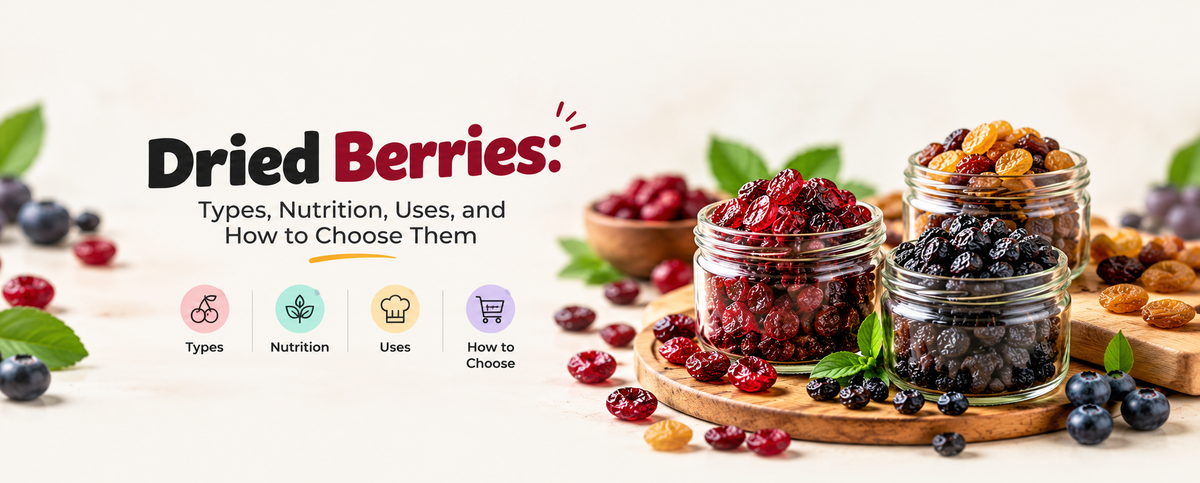
Dried Berries: Types, Nutrition, Uses, and How to Choose Them
Swap out a bag of chips for a handful of dried berries, and you'll notice the difference almost immediately -- a chewy, naturally sweet goodness that satisfies a craving without the grease or the guilt. Dried berries have become one of the most popular categories of healthy snacking: not only do they carry intense flavor, but they also keep a long time, and they're full of genuine nutritional value. However, not all dried berries are created equal, and knowing what you're buying -- what goes into it, how to store it, and how to use it -- makes a big difference in what ends up in your pantry. This guide covers the common types of dried berries, what nutritional value they carry, how they're made, practical everyday uses for them, and exactly how to choose and store them so they keep their freshness for years rather than months.
What Are Dried Berries?
Dried berries are simply berries -- blueberries, cranberries, strawberries, other small fruits -- that have had most of their water content removed, forming a smaller, chewier, and far more shelf-stable version of the fresh fruit. Because berries are naturally high in sugar and acid, they tend to dry nicely and carry a very intense flavor that is noticeably sweeter and tangier than the fresh version. This is part of the reason why dried berries have become such a popular alternative to processed sweets: genuine sweetness and chewiness without relying on refined sugar or artificial flavoring.

Common Types of Dried Berries
Dried Blueberries
Carry a tart-sweet flavor and intense blue-purple color from the anthocyanins, the antioxidant compounds responsible for the fruit's color. They hold up well in baking and granola and have a slightly wine-like, tart flavor that sets them apart from other sweeter dried fruits.
Dried Cranberries
Naturally quite sour in flavor, dried cranberries are usually lightly sweetened during processing to balance their tartness. They're a familiar addition to trail mixes, salads and holiday stuffing, and their firm, chewy texture makes them one of the more versatile dried berries in the kitchen.
Dried Strawberries
Hold onto their delicate, almost candy-like sweetness and have a lighter, sometimes crisper texture than other dried berries, especially when freeze-dried. They work well crumbled over cereal or mixed in smoothies.
Dried Black Raisins
Technically a dried grape, and not a berry in the botanical sense, raisins are usually grouped with the dried berries in most snacking contexts because of their similar size, texture, and use. Black raisins in particular carry a denser flavor and higher iron content than their golden counterparts and are a staple in South Asian cooking.
Dried Goji Berries
Slightly chewy with a mild tangy-sweet flavor, dried goji berries have become a health food staple for their vitamin A and antioxidant content. They're often found in trail mixes, teas, and grain bowls. Each of these berries brings something different to the table in terms of flavor and texture, which is why a well-stocked pantry usually includes a mix of them rather than just one variety.
Nutrition in Dried Berries
Dried berries provide a good source of nutrition, though the exact nutritional profile will differ slightly with each kind of dried berry.
Key Nutrients to Know
- Fiber: Most dried berries retain a solid portion of their original fiber content, which supports digestion and keeps you feeling full for longer.
- Antioxidants: Anthocyanins and other polyphenols found in blueberries and cranberries, in particular, help reduce oxidative stress in the body.
- Natural sugars: Since the water content is removed in the drying process, the natural sugars are more intense per bite, which is why dried berries taste much sweeter.
- Vitamins and minerals: Dried Berries in general are a good source of vitamin C, vitamin K, potassium, and iron.
-
Low fat: Naturally low in fat, dried berries are a much lower-calorie item compared to nuts per gram.
Watch out for Added Sugar
Some commercially dried berries, in particular cranberries (which is naturally quite sour), may have added sugar to balance their natural sourness. This does not make them unhealthy, but it does mean that the nutrition label is worth checking if you're trying to limit added sugar in your diet. Unsweetened dried berries also exist and offer a more concentrated, tangy flavor for those who like to avoid the extra sweetness.
How Are Dried Fruits Made? From Fresh Fruit to Shelf-Stable Snack
Understanding how dried berries are actually produced will tell you what to look for in order to differentiate between quality and price. Drying fruit is one of the oldest food preservation techniques around, and the basic premise of "remove water, keep flavor" hasn't changed much. However, the methods used to do this do vary, from the old-fashioned to the highly industrial.
Sun Drying
The oldest and simplest method, sun drying, consists of laying the fruit out in direct sunlight and allowing the natural heat and airflow to evaporate the moisture over several days. This method is often used for raisins and apricots and requires warm, dry conditions in order to work well. The downside of this process is limited control -- humidity, insects, and other weather factors can all affect the outcome of the final product.
Air Drying
Air drying uses controlled air circulation at room temperature (rather than direct sun) to draw out the moisture. This process usually preserves more of the fruit's original nutrition and colors compared to sun drying.
Oven and Dehydrator Drying
For more consistent quality, oven and dehydrator drying use an oven or dehydrator set to a low temperature range of 140 to 170°F (60 to 75°C) and allow the warm air to circulate until the moisture evaporates. This method provides much greater control than sun or air drying.
Freeze-Drying
An advanced method, freeze-drying, consists of freezing the fruit and then removing the moisture through sublimation (changing ice directly to gas, without going through a liquid state). Since this process takes place at low temperatures, the resulting freeze-dried berries will retain more of their original color, flavor, and nutrition than traditional dried berries. This is also why freeze-dried berries have a distinctive lighter, crisper texture than their traditionally dried counterparts.
Everyday Uses for Dried Berries
Dried berries earn their place in a pantry because they work so well in so many different contexts, not just as a snack.
- As a Standalone Snack - The simplest use for dried berries is as a standalone snack -- a small handful of mixed dried berries kept on hand for sweet cravings.
- In Breakfast and Smoothie Bowls - Stirred into oatmeal, overnight oats or yogurt, dried berries offer natural sweetness and chewiness without needing any added sugar or syrup.
- In baking, dried blueberries, cranberries, and raisins are often added to muffins, scones, and breads, where their concentrated flavor reduces the need for extra sugar in the recipe itself.
- In Trail Mixes and Energy Bites - Combined with nuts, dried berries form the backbone of most trail mixes and no-bake energy balls, offering a portable source of energy for hikes, workouts, or long afternoons at a desk.
- As a Salad or Grain Bowl Topper - A scattering of dried cranberries or blueberries provides pops of sweetness and texture to green salads, grain bowls and even some savory dishes, balancing out bitter greens or rich dressings.
How to Choose Quality Dried Berries
Not all dried berries come with the same nutritional benefits, so a little label reading goes a long way.
Check the Ingredient List
A quality dried berry product will list the berry itself as the main ingredient, with minimal additions. If sugar, oil, or preservatives are near the top of the ingredient list, you're looking at a heavily processed product.
Watch out for added colors and flavors
Some cheaper dried berry products use added color and flavoring to imitate the appearance of a more expensive berry. This is especially common with dried blueberries, where a less costly base fruit is often dyed and flavored to pass for a blueberry. Checking that 'blueberries' is the actual listed ingredient is the simplest way to avoid getting a product that says "blueberries" but uses a generic, unnamed fruit base.
Consider the Country of Origin
Imported dried berries from regions known for quality berry production (like Canada and the northern US for blueberries and cranberries) will usually carry better sourcing information on the label than generic, unlabeled bulk products.
Texture and Appearance
Good dried berries should look plump and slightly glossy rather than shriveled, hard, or dusty. A product that looks completely uniform and unnaturally bright may be worth taking a second look at on the ingredient list, too, as this kind of artificial appearance is sometimes the result of added coloring.

How to Store Dried Fruits and Berries to Keep Them Fresh Longer
Dried berries keep much longer than fresh fruit, but they're not indestructible, and poor storage is the most common reason people end up with stale, hardened, or moldy dried fruit before they've had the chance to finish it.
Keep them airtight
Oxygen is one of the main culprits of flavor loss and rancidity, so once opened, transfer dried berries into a sealed glass jar, a resealable freezer bag, or another sealed airtight container rather than just leaving the original bag folded up.
Store them in a cool, dark place
Avoid exposing dried berries to heat and light, which will degrade their flavor and nutritional value. A pantry shelf away from the stove, oven or direct sunlight is a common default. As a rule of thumb, stored in this manner, dried berries should stay fresh for up to six months.
Refrigerate or freeze them
In warmer, more humid climates, refrigeration will greatly extend the shelf life of dried berries, keeping the fruit fresher for longer. Freezing extends it even further, with many dried fruits maintaining their quality for up to a year or more (in a sealed bag with the air squeezed out and sealed).
Discard spoiled berries
Get rid of any dried berries you notice mold, a strange smell, or discoloration on. The fruit that has become unnaturally hard or dusty has probably lost most of its moisture balance and, while not unsafe, won't have the same flavor and texture as before.
A Quick Storage Reference
|
Storage Method |
Typical Shelf Life |
|
Airtight container, room temperature |
Up to 6 months |
|
Airtight container, refrigerated |
6–12 months |
|
Airtight container, frozen |
12 months or more |








Share:
Dry Fruits: Nutrient Facts, Health Benefits, Uses, and Easy Recipes
Dried Blueberries: Nutrition, Uses & Buying Guide