

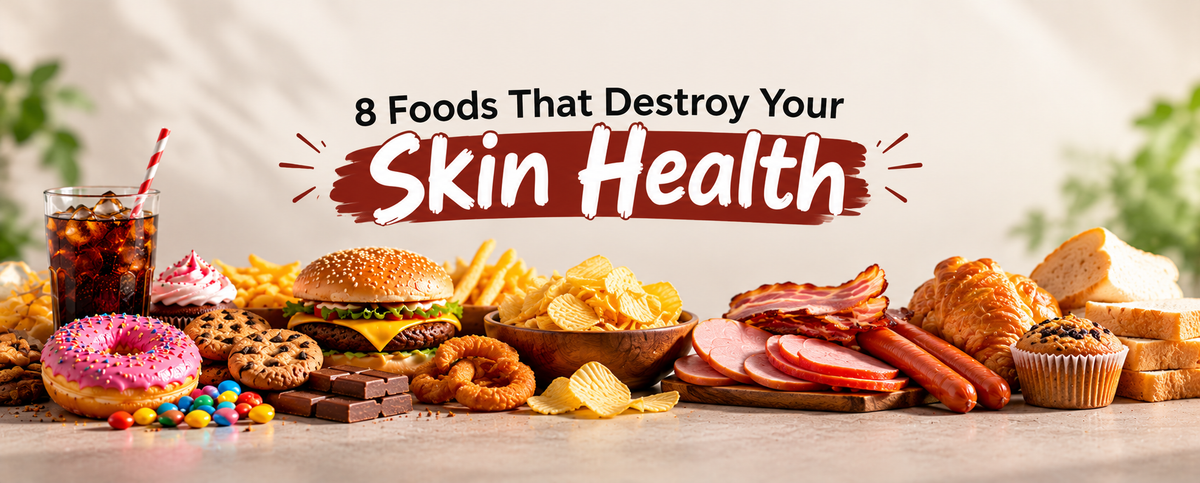
8 Foods That Destroy Your Skin Health (and What to Eat Instead)
You can spend a small fortune on serums and still lose the battle if your plate works against you. Skin is the body's largest organ, and it reflects what happens inside: blood sugar, inflammation, hydration, and gut health all leave marks on your face. This guide covers eight of the foods that destroy your skin health, explains how each one does its damage, and shows what to eat instead. You will also see the real cons of eating bad food, the pros of eating good food, and a simple what-to-eat, what-not-to-eat swap list you can start using this week. No crash diets, no miracle claims, just what the evidence supports.

Why Is Skin So Sensitive to What You Eat?
Skin is a living tissue with its own blood supply, oil glands, immune cells and a thin protective barrier. It is also one of the last places the body sends nutrients, which means a poor diet shows up here early. Three mechanisms explain most of the damage.
How Food Does It: The Three Main Pathways
-
Blood sugar spikes and hormones. Fast-digesting carbohydrates push up insulin and a growth hormone called IGF-1. Both can increase oil production and clog pores, which is why high-glycaemic diets are associated with acne.
-
Inflammation. Diets heavy in refined starch, sugar and fried fats keep the body in a low-grade inflammatory state. Skin responds with redness, flare-ups and slower healing.
-
Glycation. Excess sugar in the bloodstream attaches to collagen and elastin, the proteins that keep skin firm. The result is stiffer, less elastic skin that wrinkles sooner.
Gut health, hydration and sleep play supporting roles. Genetics matter too, so two people can eat the same meal and see different results. Think of food as one lever you control, not the only one.
8 Foods That Destroy Your Skin Health
Evidence is strongest for the first few items and more mixed for the last ones. Where individual response varies, we say so.

1. Sugary Drinks and Sweets
Soft drinks, packaged juice, sweetened chai, mithai and desserts deliver a rapid sugar load. Frequent spikes feed both acne and glycation. Liquid sugar is the worst offender because it hits the bloodstream fastest.
2. Refined Carbohydrates
White bread, maida snacks, white rice in big portions, instant noodles and biscuits behave much like sugar in the body. Studies of low-glycaemic diets have shown fewer breakouts in people prone to acne, which points the finger at this group.
3. Fried Food and Trans Fats
Samosas, pakoras, fries and anything cooked in repeatedly reheated oil promote inflammation. Trans fats found in some bakery items and margarines are particularly unhelpful. Heavy, greasy meals do not cause pimples by touching your skin, but the inflammatory load they create can aggravate existing breakouts.
4. Dairy, for Some People
Dairy is not bad for everyone. Still, several studies link milk, particularly skimmed milk, with more acne, possibly through hormones and IGF-1. If you are breakout-prone, try cutting back for four to six weeks and see what changes. Curd and yoghurt seem to be better tolerated than milk, though individual results differ.
5. Alcohol
Alcohol dehydrates the body, widens blood vessels and can trigger flushing, which worsens redness and rosacea. It also disrupts sleep, the time when skin repairs itself. Regular heavy drinking tends to show as puffiness, a dull tone and visible broken capillaries.
6. Very Salty Foods
Chips, pickles, instant soups and takeaway meals cause water retention, which shows up as puffy eyelids and a swollen face in the morning. Excess salt also pulls moisture from the skin, making dryness more noticeable.
7. Ultra-Processed Snacks and Processed Meats
Packaged namkeen, sausages, salami, and ready meals combine refined starch, salt, additives and unhealthy fats. They crowd out the vegetables and fruit that supply skin-protecting antioxidants. Research on the Western-style diet keeps linking it to poorer skin outcomes.
8. Whey Protein and Sugary "Health" Bars
This one surprises people. Whey protein powders have been associated with acne flare-ups, especially in young men, and many protein bars and flavoured shakes are loaded with sugar. If you break out after starting supplements, try a plant-based protein or whole-food sources like eggs, lentils, and paneer.
The Cons of Eating Bad Food: What It Looks Like on Your Skin
The cons of eating bad food rarely arrive overnight. Skin cells turn over roughly every four to six weeks, so a diet change usually takes that long to show. Common signs of a diet working against you include:
-
Acne and clogged pores, especially along the jaw, chin and forehead
-
Dullness and uneven tone as the skin loses its natural glow
-
Premature fine lines and sagging are linked to glycation and oxidative stress
-
Puffiness, particularly around the eyes, from salt and alcohol
-
Dryness and a weak skin barrier leave skin tight, flaky or easily irritated
-
Redness and flare-ups in rosacea, eczema, and psoriasis
-
Slow healing of spots, cuts and marks
If you notice sudden or severe changes, do not blame food alone. Hormonal conditions such as PCOS, thyroid problems, stress, sleep loss and certain medications also affect skin, so a dermatologist is the right next stop.
What to Eat: The Pros of Eating Good Food for Skin
The benefits of eating well go further than avoiding damage. A skin-friendly diet gives your body the raw material to build collagen, protect against sun and pollution, and keep the barrier strong. The pros of eating good food include clearer, calmer skin, a more even tone, better hydration and a healthier glow.

Skin-Supportive Foods Worth Adding
-
Colourful fruit and vegetables: carrots, tomatoes, spinach, papaya, oranges and berries supply vitamin C, carotenoids and polyphenols that protect skin from oxidative stress.
-
Fatty fish, walnuts, flaxseed and chia: omega-3 fats calm inflammation and support the skin barrier.
-
Nuts and seeds: almonds, sunflower seeds and pumpkin seeds provide vitamin E and zinc, both linked to skin repair.
-
Whole grains and millets: ragi, oats, brown rice and jowar release energy slowly, so insulin stays steadier.
-
Eggs, lentils, paneer and tofu: protein supplies the amino acids needed for collagen.
-
Curd, buttermilk and fermented foods: probiotics support gut health, which is increasingly linked to skin health.
-
Green tea and plenty of water: hydration helps skin look plump, although drinking extra water will not fix a dry barrier by itself.
-
Olive oil, avocado and dark chocolate (70% or higher, in small amounts): healthy fats and antioxidants.
The pattern matters more than any single superfood. Mediterranean-style eating, built on vegetables, legumes, whole grains and healthy fats, shows up repeatedly in research on healthier skin.
What Not to Eat vs. What to Eat: Easy Swaps
You do not need to give up everything you love. Start by trading one item at a time.
|
What not to eat |
What to eat instead |
Why it helps |
|
Soft drinks, packaged juice |
Water, coconut water, unsweetened buttermilk |
Avoids sugar spikes |
|
White bread, maida snacks |
Whole-grain roti, ragi, oats |
Slower glucose release |
|
Deep-fried snacks |
Baked or air-fried versions, roasted chana |
Less inflammatory fat |
|
Chips and instant noodles |
Makhana, nuts, fruit with curd |
Cuts salt and refined starch |
|
Sausages and deli meats |
Eggs, lentils, grilled fish, paneer |
Fewer additives, more protein |
|
Sugary protein bars |
Whole-food protein and a handful of nuts |
Less hidden sugar |
|
Evening cocktails |
Herbal tea or sparkling water with lime |
Protects hydration and sleep |
Frequently Asked Questions
1. Can food really cause acne?
Food is not the only cause, but research supports a link between high-glycaemic diets and acne, and some studies connect dairy and whey protein with breakouts. Genetics, hormones and stress also play a part.
2. How long before my skin improves after changing my diet?
Skin renews itself over roughly four to six weeks, so give any change at least a month. Less puffiness and fewer flare-ups sometimes show sooner, while pigmentation and fine lines take months.
3. Is chocolate bad for your skin?
Sugary milk chocolate may aggravate breakouts in some people. Dark chocolate with 70% cocoa or more, eaten in small amounts, is generally a better choice.
4. Should I give up dairy completely?
Not necessarily. If you are acne-prone, try reducing milk for four to six weeks and observe. Curd and yoghurt are often better tolerated. Do not cut out a whole food group without making sure you get enough calcium and protein elsewhere.
5. Does drinking more water give clear skin?
Staying hydrated supports healthy skin, but water is not a cure for acne or wrinkles. Aim for regular, adequate intake rather than forcing extra litres.
Conclusion
The foods that destroy your skin health do it gradually, through sugar spikes, inflammation and damage to collagen. The good news is that the same logic works in your favour: fruit, vegetables, healthy fats, whole grains and enough sleep and water give your skin what it needs to repair itself. Pick two swaps from the table above and stick with them for a month before judging the results. Skin responds to consistency, not perfection. CLICK HERE to buy the best products for skin to keep it clean internally.



Share:
Foods That Destroy Your Brain Health: What to Cut and How to Recover
Dried Cranberries: Nutrition, Uses & Buying Guide