


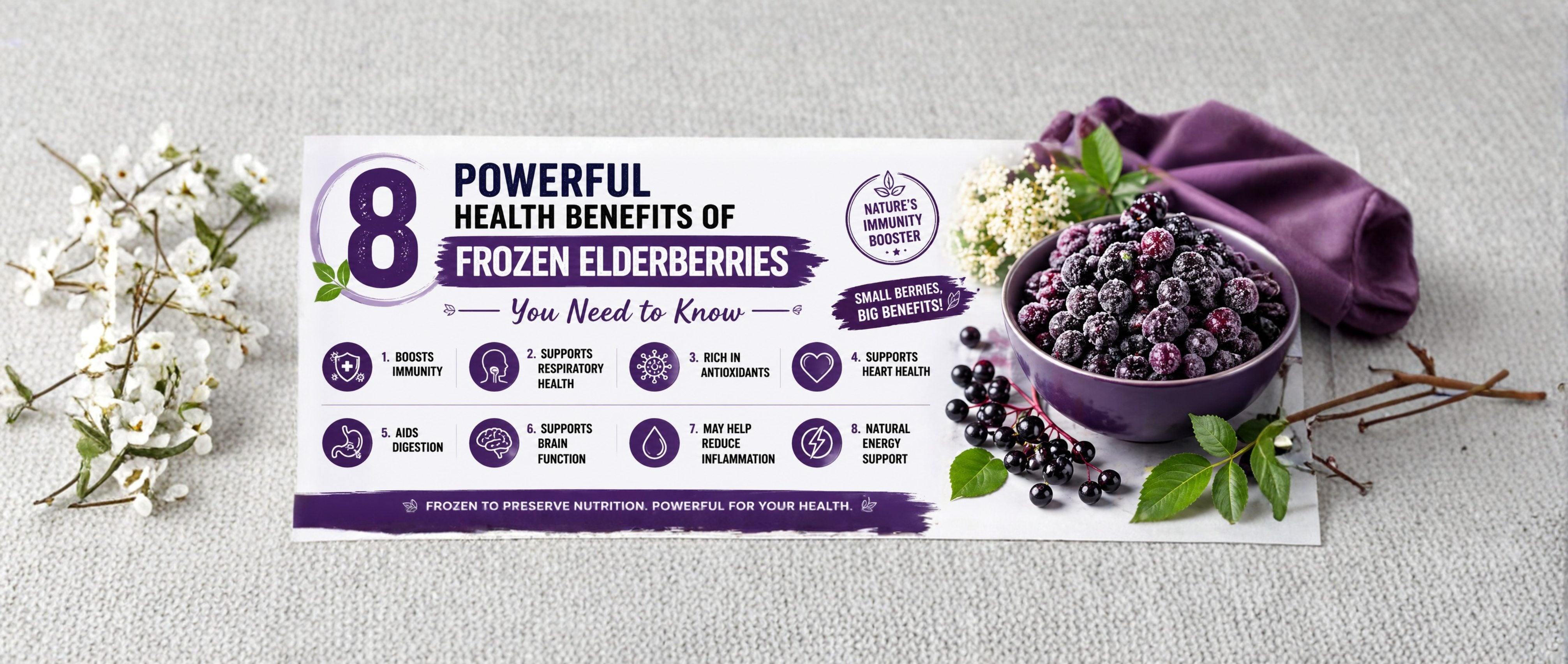
8 Powerful Health Benefits of Frozen Elderberries You Need to Know
Elderberries have gradually moved from traditional folk medicine into modern wellness routines, and for good reason. These small, deep-purple berries are rich in plant-based nutrition and have a long history of supporting the body's natural defences. Today, frozen elderberries are becoming the preferred choice for health-conscious consumers, food manufacturers, and supplement producers. Why frozen? Freezing them at peak ripeness is one of the best ways to maintain their full nutritional profile without using artificial preservatives. Whether you are making a home remedy syrup or buying in bulk, this guide explains eight evidence-supported health benefits of elderberries and why the frozen form is often the best option.
Why Frozen Elderberries Are More Than Just a Convenient Option
Before discussing the benefits, it is important to understand why frozen fruit, especially elderberries, stays nutritious. When elderberries are harvested and immediately frozen using Individually Quick Frozen (IQF) technology, the cellular structure of the fruit is preserved at its nutritional peak. Unlike dried or processed forms, IQF frozen elderberries keep their anthocyanins, vitamins, and antioxidants with little loss.
This is important because elderberries are sensitive to heat and prolonged storage. Fresh elderberries have a very short shelf life, and just a few days of being stored in warm conditions can lead to significant losses in bioactive compounds. Frozen elderberries avoid this issue entirely; they are ready when you are, keeping their nutritional value almost intact.
For both producers and home users, this makes frozen elderberry fruit one of the most practical and reliable options available today.
Benefit 1: Exceptional Antioxidant Content That Supports Whole-Body Health

Why Antioxidants Matter More Than You Think
Elderberries are among the most antioxidant-rich fruits on the planet. Their deep violet-black colour comes from high levels of anthocyanins, a type of flavonoid known for its strong ability to combat free radicals. Free radicals are unstable molecules that accumulate in the body due to environmental stressors such as pollution, UV exposure, and processed foods. Over time, they contribute to oxidative stress, which is linked to ageing and chronic disease.
The anthocyanin content in elderberries outperforms many commonly consumed fruits, including blueberries and blackcurrants, on a per-gram basis. When you use frozen elderberries, you gain that antioxidant richness in a form preserved at its natural peak, unlike extracts or powders that may be altered during processing.
For anyone aiming to build a diet that supports long-term cellular health, adding frozen elderberry fruit regularly is a truly beneficial choice.
Benefit 2: Immune System Support Backed by Real Research
Elderberries and Immune Function — What the Science Says
One of the most well-known benefits of elderberries is their positive impact on immune health. Several clinical studies have looked at how elderberry extracts influence the duration and severity of cold and flu symptoms, with consistently promising findings.
One often-cited study showed that elderberry supplementation led to a significant reduction in the length of upper respiratory symptoms compared to placebo groups. The proposed reason involves the berry's flavonoids interacting with immune signalling pathways, particularly those related to cytokine regulation.
It is crucial to note that these studies generally used concentrated elderberry products, which means that the quality and strength of the raw material are very important. Frozen elderberries, especially those processed using IQF, provide a starting point with the highest possible concentration of active compounds, making them the preferred ingredient for immune-support syrups, tinctures, and functional food products.
Benefit 3: Rich Source of Vitamins C and B6
A Nutritional Profile That Punches Well Above Its Weight
Elderberries are a good source of vitamin C, one of the key nutrients for immune function, skin health, and collagen production. A standard serving of elderberries provides a substantial portion of the daily recommended intake of vitamin C, making them a valuable whole-food source, not just a supplement.
In addition to vitamin C, elderberries also contain vitamin B6, essential for protein metabolism, neurotransmitter production, and healthy red blood cell function. Dietary sources of B6 often get overlooked because the vitamin is considered less "exciting" than C or D, but consistent intake is vital for sustained energy and cognitive function.
Frozen elderberries are particularly appealing because water-soluble vitamins like B6 and C are very delicate; they break down quickly with heat, light, and oxidation. Freezing greatly slows this breakdown, allowing frozen fruit to maintain a higher percentage of these vitamins compared to dried or processed alternatives.
Benefit 4: Anti-Inflammatory Properties That May Ease Everyday Stress on the Body
Chronic Inflammation and the Role of Elderberry Compounds
Inflammation isn't inherently harmful; it's the body's natural reaction to infection or injury. The problem arises when inflammation becomes chronic and low-grade, quietly affecting joints, the cardiovascular system, and overall energy. Diet significantly influences this type of systemic inflammation, and elderberries deserve consideration.
The flavonoids in elderberries—specifically quercetin, kaempferol, and the anthocyanins mentioned earlier—have shown anti-inflammatory effects in laboratory studies. While much of this research is still in the early stages, the biochemical reasoning is logical: these compounds inhibit certain pro-inflammatory enzymes and cytokines, helping to regulate the body’s inflammatory response.
For those dealing with everyday joint stiffness, soreness after exercise, or general fatigue linked to inflammation, including frozen elderberries in your diet offers a whole-food approach that complements other healthy habits rather than replacing them.
Benefit 5: Cardiovascular Support Through Flavonoid-Rich Nutrition
Heart Health Benefits You Might Not Expect From a Small Purple Berry
Elderberries contain several compounds that research has linked to heart health—not in a sudden, all-encompassing way, but in the steady, cumulative manner that dietary habits typically work. The quercetin and anthocyanins in elderberries contribute to improved blood vessel function, reduced oxidative damage to LDL cholesterol, and modest positive effects on blood pressure have been noted in some studies.
Anthocyanin-rich diets are linked to lower rates of cardiovascular events in epidemiological research, especially in large cohort studies that assess fruit and vegetable intake over time. Elderberries are among the most anthocyanin-dense fruits, making them a great choice for a heart-healthy diet.
This is particularly important for food manufacturers creating functional beverages, wellness shots, or health-oriented frozen fruit products. Frozen elderberries offer a clean, traceable ingredient with real cardiovascular benefits, which both regulators and health-conscious consumers increasingly value.
Benefit 6: Blood Sugar Regulation and Metabolic Health
What Research Suggests About Elderberry and Glucose
Maintaining stable blood sugar is key to metabolic health, and elderberries show some interesting early promise in this area. Some compounds in elderberry fruit, especially the flavonols and phenolic acids, have been researched for their potential to affect glucose metabolism and the body’s insulin response.
In certain in-vitro and animal studies, elderberry extracts seem to inhibit enzymes involved in carbohydrate digestion, which may slow glucose absorption. While this does not lead directly to clinical recommendations for blood sugar management, it suggests that elderberries can be a beneficial part of a balanced diet, especially for those looking to reduce refined carbohydrates.
For those mindful of glycemic impact, frozen elderberries are naturally lower in sugar compared to many other fruits. This makes them a smart choice for smoothies, healthy snacks, and recipes without raising overall sugar content.
Benefit 7: Digestive Health and Prebiotic Potential
Supporting the Gut Microbiome With Every Serving
The link between fruit consumption and gut health is well-known, and elderberries offer something unique. They combine dietary fibre and polyphenols that together foster a healthy gut environment.
Dietary fibre from elderberries supports regular bowel movements and serves as food for good gut bacteria. More interestingly, the polyphenols in elderberries are not completely absorbed in the small intestine. They reach the colon, where they interact with the microbiome directly. Research suggests that foods rich in polyphenols can promote the growth of beneficial bacteria, acting as prebiotics.
This connection between gut health and immunity is increasingly recognised as vital for overall well-being. Since a large part of immune activity starts in the gut, supporting the microbiome with polyphenol-rich foods like frozen elderberries can enhance immune health.
Benefit 8: Skin Health and the Anti-Ageing Angle
Why Your Skin May Benefit From Elderberries Too
Collagen production, UV protection, and managing oxidative stress are key to long-term skin health. Elderberries contribute in meaningful ways to all three parts.
Vitamin C is crucial for collagen production. Without enough vitamin C, the body struggles to build or repair the collagen matrix that keeps skin firm and elastic. The anthocyanins in elderberries also help neutralise free radicals that come from UV exposure and environmental pollutants, which contribute to premature skin ageing.
Some topical skincare products now include elderberry extracts for this reason, but the benefits of consuming frozen elderberries are also significant. A diet rich in antioxidants and vitamin C supports skin health from the inside out. This approach may take longer than topical treatments, but it offers more lasting results.
How to Use Frozen Elderberries: Practical Ideas for Every Day
Getting the benefits of elderberries is easy. Frozen elderberries are versatile and fit smoothly into daily routines:
- Elderberry syrup: A classic home remedy. Simmer frozen elderberries with water, honey, and spices like cinnamon and ginger. Take a spoonful daily during the cold season.
- Smoothies: Simply add a handful straight from the freezer — no thawing needed. They blend well with banana, ginger, and oat milk.
- Wellness shots: Mix concentrated elderberry juice with lemon and turmeric for a strong morning drink.
- Baked goods and jams: Use thawed elderberries in muffins, crumbles, or homemade preserves.
- Functional beverages: For food producers, individually quick frozen (IQF) elderberries serve as a reliable ingredient for juices, shots, and concentrates.
One important note for home preparation: raw elderberries contain small amounts of compounds that can cause nausea in large quantities. Cooking or proper processing neutralises these compounds, so recipes usually call for simmering or heat treatment before consumption.
What to Look for When Buying Frozen Elderberries
Not all frozen elderberries are the same, and for health reasons or commercial use, quality matters. IQF processing (Individually Quick Frozen) is the best choice for frozen fruit. Unlike block-frozen products, where berries clump together, IQF freezes each berry individually at very low temperatures right after harvest. This method keeps cellular structure, colour, flavour, and importantly, the bioactive compounds intact.
When evaluating a supplier or product, look for:
- Traceability: Where were the berries grown? European elderberries (especially Sambucus nigra) are well-studied and considered the standard.
- Harvest timing: Berries should be harvested at full ripeness when anthocyanin levels are highest.
- Processing transparency: Minimal handling between harvest and freezing is a good sign of quality.
- Certifications: Organic certification, food safety audits (BRC, IFS), and country-of-origin labelling indicate supplier accountability.
For bulk buyers and food manufacturers, these factors influence the potency and consistency of the final product.
Conclusion: Small Berry, Serious Benefits
Elderberries have built their reputation in the wellness community not through marketing but through real nutritional science, traditional use, and positive consumer outcomes. From immune support and antioxidant effects to heart health and gut benefits, the advantages are diverse and supported by solid research.
What makes frozen elderberries particularly attractive is the practical benefits they provide: consistent quality, long shelf life, and maintained nutritional integrity that dried or processed forms often lack. Whether you’re a home cook making immune-boosting syrup, a product developer sourcing a functional ingredient, or someone looking to eat healthier, frozen elderberries are an excellent and versatile option.
If you want to explore high-quality IQF frozen elderberries for personal or commercial use, now is a good time to find suppliers who focus on traceability and harvest-to-freeze quality control. Your body and your recipes will benefit from the choice.






Share:
10 Healthy Benefits of Frozen Red Cherries
10 Best Antioxidant-Rich Foods for Glowing Skin That Actually Work