
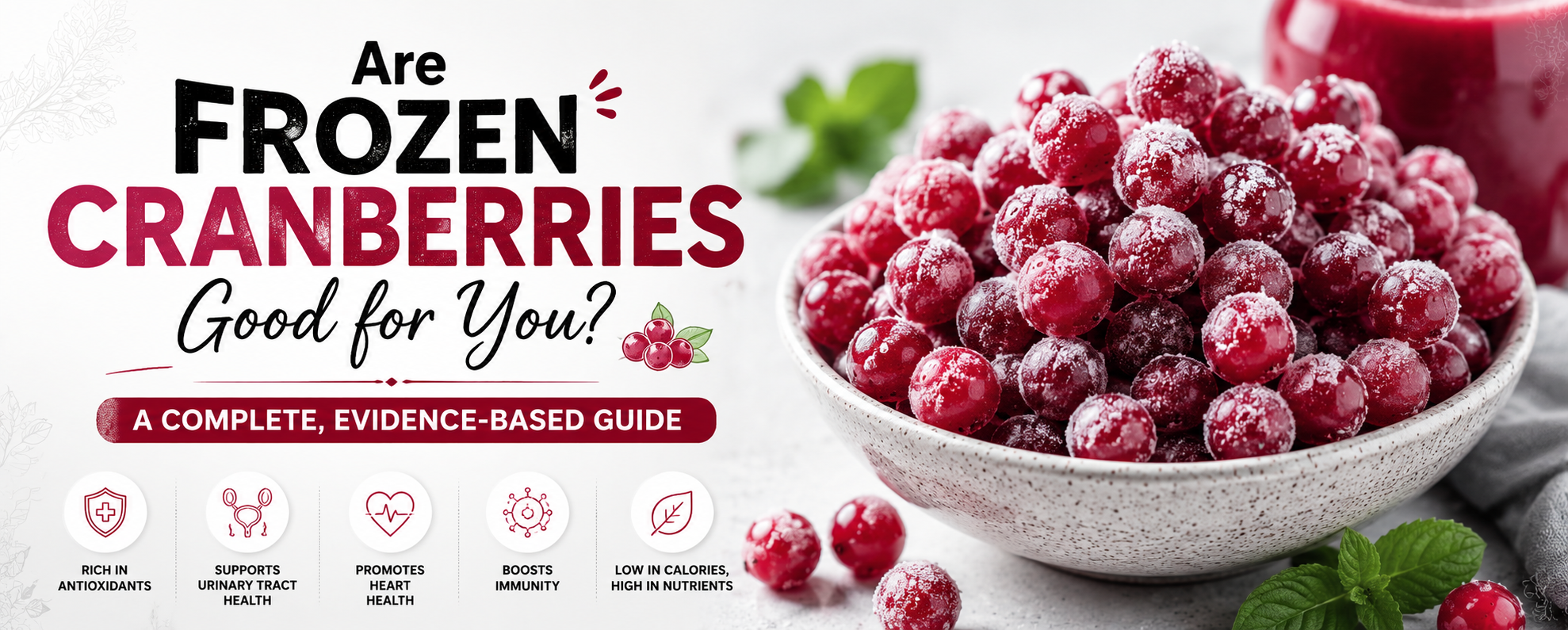
Are Frozen Cranberries Good for You? A Complete, Evidence-Based Guide
Cranberries are often regarded as a superfood, yet most people only consider them during the holiday season. In reality, frozen cranberries are on sale all year round, and for those who want convenience without having to give up on nutrition, they should definitely be kept in the freezer. If you're a yoga enthusiast seeking snacks that are high in antioxidants, an athlete recovering from a tough training session, or just someone who can afford to be picky about the foods they eat, this guide will explain precisely what the science has to say. It will look at the nutrition facts, examine the possibility of aiding weight management, compare IQF (individually quick frozen) cranberries with fresh ones, and provide some practical ways of using them.
Just what are frozen cranberries?

Fresh cranberries are washed, sorted, and then frozen shortly after being harvested—typically within a day or so. Most commercial brands employ a process known as IQF, or individually quick frozen, which involves flash-freezing each berry individually rather than freezing them in a solid block. It is important because IQF keeps the cellular structure of the fruit intact, so that the berries remain separate in the packet and hold on to more of their texture and nutrients than other freezing methods would permit.
Cranberries are picked in the fall, which means that freezing allows their availability to be extended from a few weeks in the autumn to all twelve months of the year; this alone makes them a practical option for anyone who wants to have consistent access to a nutrient-rich fruit.
Is it good for you to eat frozen cranberries? The short answer is...
Yes, frozen cranberries do have health benefits and, in certain aspects, are as nutritious or perhaps only slightly more so than fresh ones. Freezing stops the natural breakdown process which starts as soon as the fruit is picked. Fresh cranberries left in a fruit display gradually lose their vitamin C and antioxidant content over days or weeks. In contrast, frozen cranberries retain most of their nutritional value at the time of harvesting.
Core Nutrition Breakdown (per 100g, unsweetened, thawed)
- Calories: approximately 46
- Fiber: 3.6g
- Vitamin C: about 13mg (roughly 15% of daily needs)
- Manganese: a significant contributor to daily requirements
- Antioxidants: high concentrations of proanthocyanidins, quercetin, and anthocyanins.

It is precisely because of their high nutrient density and naturally low sugar and calorie content that cranberries—whether fresh or frozen—are so frequently mentioned in discussions about clean eating and functional nutrition.
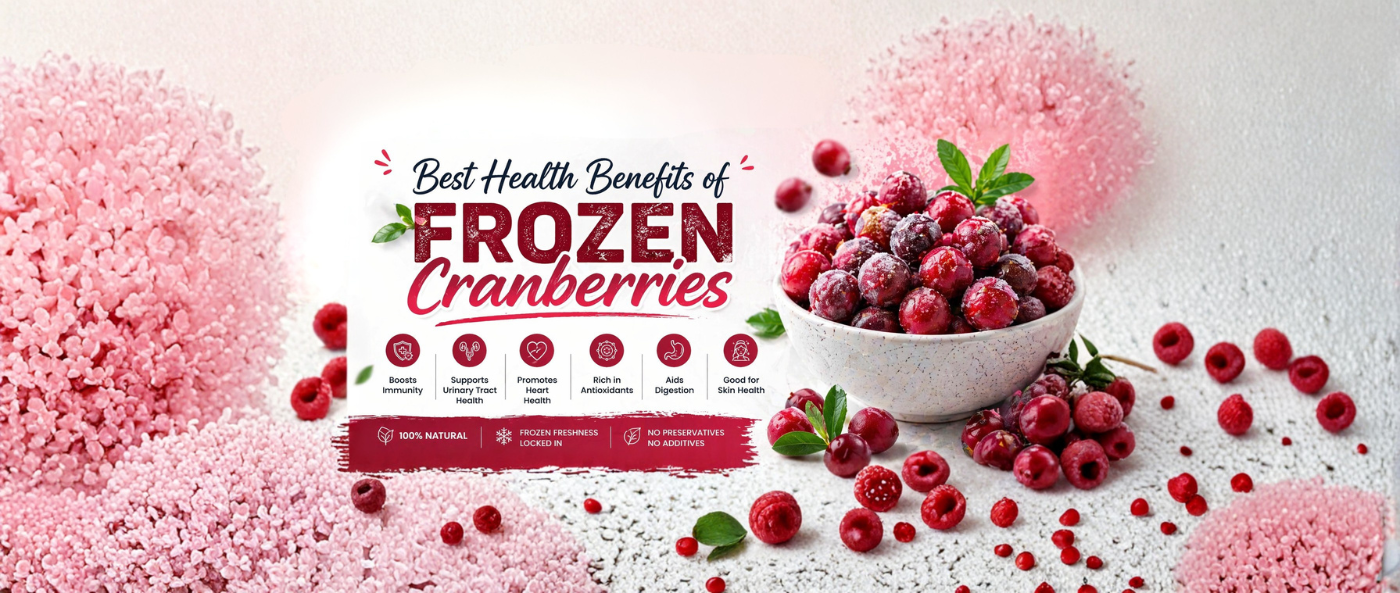
Frozen Cranberries Health Benefits
1. Support for the urinary tract and the bladder
Cranberries are most famous for containing compounds known as proanthocyanidins, which might help in preventing some bacteria from attaching to the walls of the urinary tract; frozen cranberries keep these compounds well and so can therefore be considered a sensible whole-food addition for individuals prone to UTIs, together with — not in place of — medical treatment when necessary.
2. Antioxidant and Anti-Inflammatory Support
Cranberries have a high antioxidant capacity on a per-serving basis and this is a significant benefit for athletes and yoga practitioners who are dealing with oxidative stress as a result of exercise. Over time, eating a diet that includes fruits rich in antioxidants is linked to lower levels of inflammatory markers.
3. Heart Health
Cranberries contain polyphenols, which have been researched for their possible role in helping to maintain healthy cholesterol levels and proper blood vessel function. Following a diet that includes berries such as cranberries together with other whole foods is consistent with heart-healthy eating patterns.
4. Digestive Health
Frozen cranberries contain about 3.6g of fibre per 100g and thus help to maintain regular digestion while also supporting a healthy gut microbiome. Since fruits that are high in fibre tend to slow down digestion, this contributes to a feeling of fullness — a beneficial characteristic for people who are trying to control their portions.
5. Immune Function
Vitamin C has a well-established function in immune defence, and cranberries offer a small but useful amount of it, particularly when they are eaten regularly as part of smoothies or snacks rather than only at times such as Thanksgiving.
Are Frozen Cranberries Good for Weight Management?
It is one of the most frequently searched questions concerning the fruit, and the answer is generally positive. Frozen cranberries contain few calories and have no added sugar (on the condition that you purchase the plain, unsweetened type—always check the label, since some frozen mixes are pre-sweetened).
Here's why they fit well into a weight-conscious diet:
- It has a low energy density; since it contains about 46 calories per 100g, you can have a large portion without taking in a great number of calories.
- It has a high fiber content and a low glycemic impact since the fiber slows down the absorption of sugar and thus helps prevent the blood sugar spikes which frequently cause cravings.
- Has a naturally tart taste. Unlike a great many fruits, cranberries are not sweet by nature, which is why they can be a good choice when adding them to smoothies or oatmeal without causing the total sugar intake to rise very much.
- There's easy portion control since the berries are frozen individually (a result of the IQF process), so you can accurately measure out exactly how much you want rather than having to guess when using a bag of fresh berries that can sometimes be mushy.
Frozen cranberries provide a simple method of increasing the volume and micronutrient content of a meal without causing the calorie intake to go over target for people who go to the gym and keep track of their macros.
Frozen Cranberries vs Fresh Cranberries: Which Wins?
|
Factor |
Frozen Cranberries |
Fresh Cranberries |
|
Availability |
Year-round |
Seasonal (Sept–Dec) |
|
Shelf life |
8–12 months |
3–4 weeks refrigerated |
|
Nutrient retention |
High, locked in at harvest |
Declines with storage time |
|
Convenience |
Pre-washed, ready to use |
Requires sorting and rinsing |
|
Cost |
Often lower per serving outside season |
Can spike in price off-season |
|
Texture |
Softer once thawed |
Firmer, crisper bite |
Frozen Cranberry Recipes to Try

-
Overnight Oats
-
Roasted Vegetable Topping
-
Homemade Trail Mix (Dehydrated)
-
Yogurt Bowls
Buying and Storing Tips
- Look at the label and pick those that are marked 'unsweetened' or 'no sugar added' whenever you can.
- The packaging will list IQF processing, and this shows that the texture will be better retained.
- To prevent freezer burn, store the food at a freezer temperature that is 0°F (-18°C) or lower.
- For optimal flavour and nutrient quality, the product should be used within 8 to 12 months, although it will still be safe to eat after that period if it is stored properly.
- Once you have thaws, do not refreeze them — instead, divide into portions before defrosting.
Conclusion:
BUY Frozen Cranberries NOW ->






Share:
Frozen Acai Berries vs Fresh Acai Berries: What Is Good for You?
What Is Speculoos Spread? Everything You Need to Know