
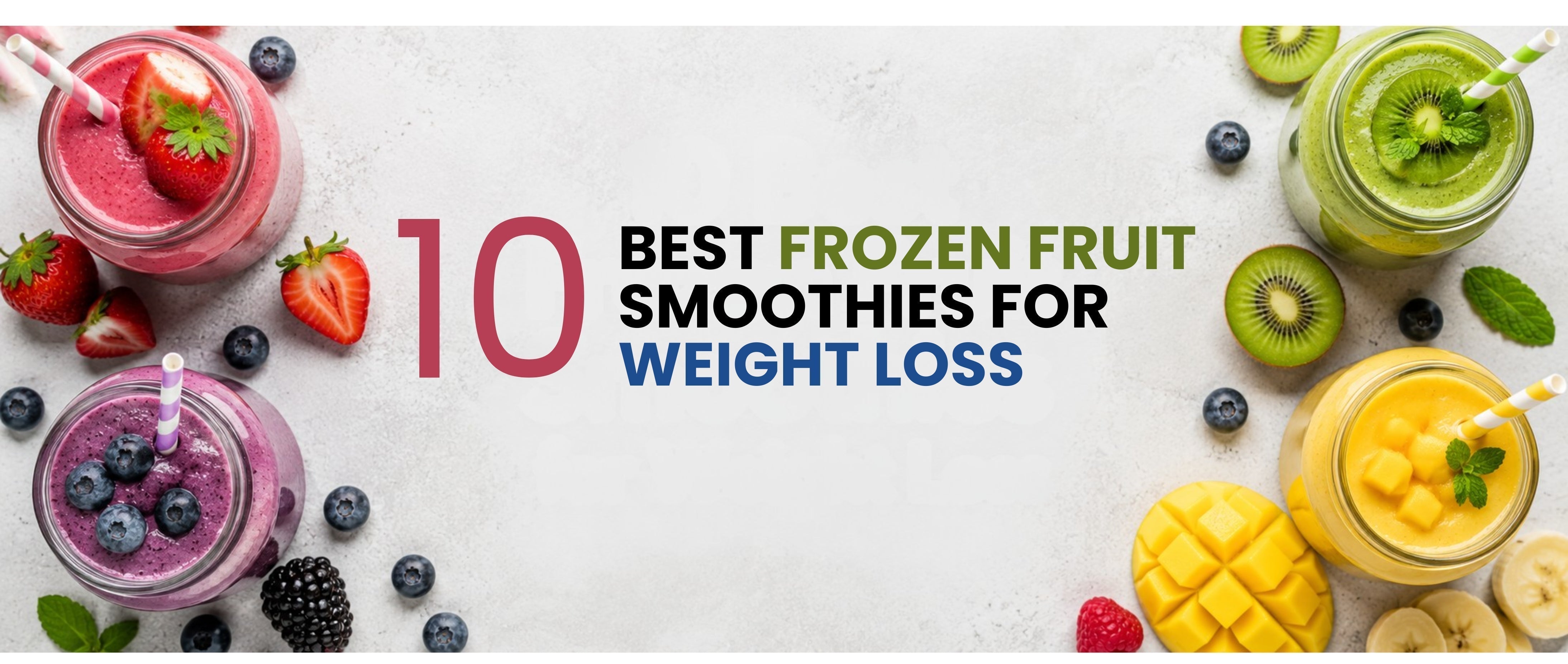
The 10 Best Frozen Fruit Smoothies for Weight Loss: Recipes, Tips & Expert Guidance
If you’re looking for a simple and tasty way to help with your weight loss goals, frozen fruit smoothies are worth considering. They are packed with fibre, micronutrients, and natural sweetness, making them one of the easiest ways to nourish your body without packing on the calories. This applies whether you’re a competitive athlete, a regular at the gym, or someone just starting a healthier routine. Compared to processed snacks or complicated meal plans, a well-made smoothie takes just five minutes and provides real benefits. This guide will cover everything: what a smoothie is, how it compares to juice and shakes, the 10 best recipes for fat loss, and common mistakes that might be hindering your progress.
What Is a Smoothie? And How Does It Differ from Juice and Shakes?
What Is a Smoothie?
A smoothie is a blended drink made from whole fruits, vegetables, or both, mixed with a liquid base like water, milk, or plant-based milk. Since they use the whole fruit, smoothies retain the fibre naturally found in produce. This fibre slows down sugar absorption, keeps you feeling full for longer, and supports healthy digestion, which are all important for anyone managing their weight.
What Is the Difference Between Smoothies, Juice, and Shakes?
This is a common question among those new to fitness, and it’s an important difference to understand.
Smoothies: Blend whole fruits and vegetables. The fibre is fully preserved, resulting in a thicker, more filling drink that digests more slowly.
Juices: Extract liquid from produce, leaving out most of the fibre. What you get is mostly concentrated natural sugar. Juicing can make your blood sugar rise quickly, and it often leaves you feeling hungry soon after, which is not ideal for weight management.
Shakes: (protein or meal replacement) are usually powder-based and focus on a specific nutrient target, often high in protein. They don’t rely on whole food ingredients like smoothies do.
For weight loss, smoothies are better - Their fibre content means your body works harder to digest them, helping you feel satisfied longer and keeping your blood sugar more stable compared to juice. That said, the ingredients you choose are still very important.
What Are FRUT and IQF — and Why Does It Matter for Your Smoothie?

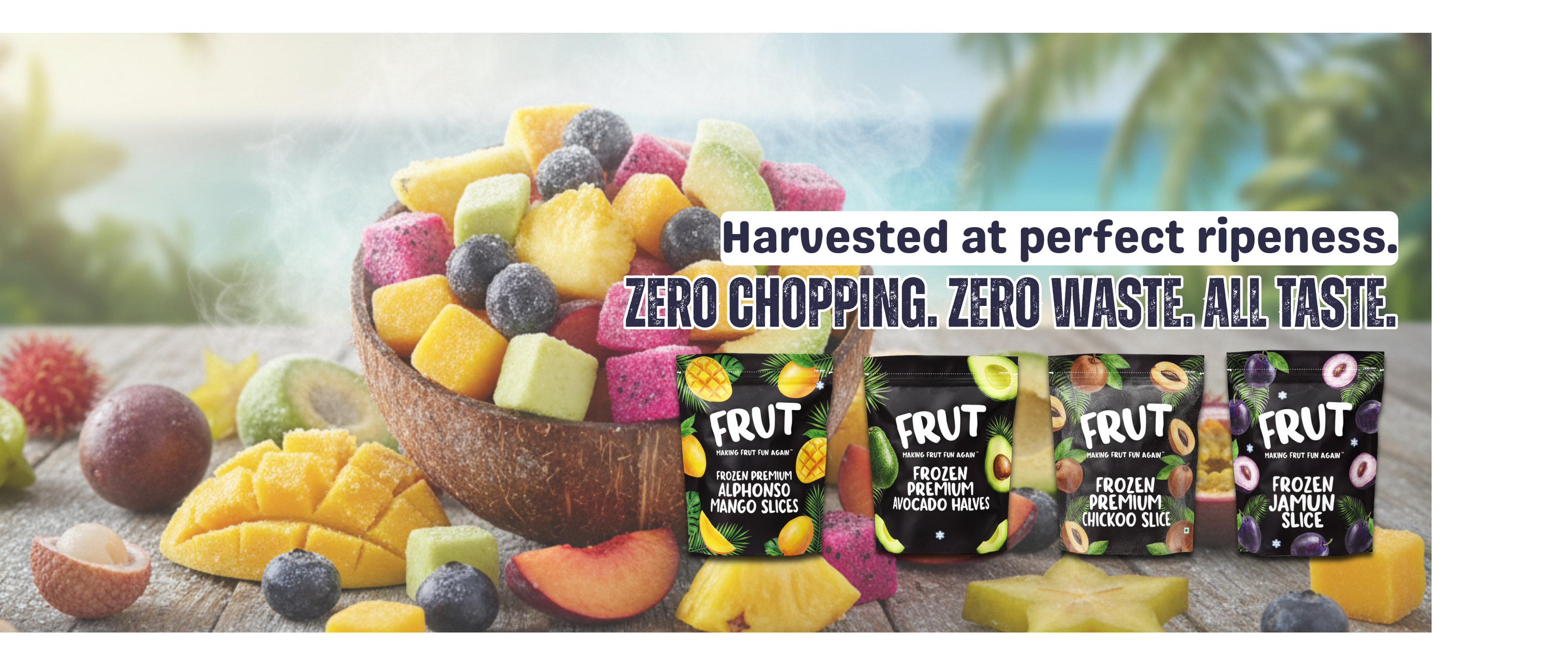
When you shop for frozen fruit, you might come across the terms "FRUT" (a branded category used by some frozen produce suppliers) and "IQF", which stands for 'Individually Quick Frozen.
IQF represents the best quality for frozen fruit. Each fruit piece is individually frozen at extremely low temperatures immediately after harvest, locking in nutrients, colour, and texture at peak ripeness. Unlike block-frozen fruit, where pieces clump together and degrade, IQF fruit keeps most of its vitamins and antioxidants. Sometimes, it even surpasses "fresh" fruit that has been in transit for several days.
Choosing IQF frozen fruit for your weight loss smoothies ensures you get maximum nutritional value without additives, syrups, or preservatives. It also provides consistent portion control since the pieces are separated and easy to measure.
Are Fruit Smoothies Better Than Juices for Weight Loss?
The short answer is yes, for most people and most goals.
Here’s a more detailed explanation. When you juice fruit, you remove the insoluble fibre that naturally slows down digestion. The sugars in juice hit your bloodstream quickly, which triggers an insulin response. Over time, frequent spikes in blood sugar can lead to fat storage and cravings — the opposite of what you want.
Smoothies, especially those made with "frozen recipes" using whole fruits, work oppositely. The fibre creates a structure that slows digestion. You feel full for two to three hours rather than needing a snack forty minutes later. Studies repeatedly show that eating more fibre is linked to lower body weight and better long-term weight management.
There’s also the role of satiety hormones: fibre triggers the release of peptide YY and GLP-1, both of which signal fullness to the brain. Juice does not have this effect. A glass of orange juice and a whole-fruit smoothie with the same calories create very different metabolic responses in your body.
Common Mistakes to Avoid When Making Weight Loss Smoothies
Even health-conscious individuals can undermine their smoothies without realising it. Here are the most common mistakes:
1. Too much fruit, not enough balance - Fruit is healthy, but it contains fructose. Four or five servings of high-sugar fruit in one smoothie can push you over 400-500 calories and cause spikes in blood sugar. Aim for one to two servings of fruit and fill the rest with leafy greens or cucumber.
2. Skipping protein - A smoothie without protein won’t keep you satisfied. Adding Greek yoghurt, a scoop of protein powder, or a tablespoon of hemp seeds turns a snack into a filling meal replacement that helps manage hunger.
3. Using fruit juice as the liquid base - This doubles the sugar content. Instead, use unsweetened almond milk, coconut water (in moderation), or plain water.
4. Ignoring portion sizes - Even “healthy” smoothies can be high in calories. If you’re including nut butter, coconut cream, dates, or banana, be careful with the amounts. These ingredients are nutrient-rich but can also be calorie-heavy.
5. Adding sweeteners - Frozen fruit at peak ripeness is already sweet. Honey, agave, or flavoured syrups are usually unnecessary and only add empty calories.
6. Drinking too fast - Chewing helps signal satiety to your brain. When you drink quickly, you miss that cue. Sip slowly and allow your digestive system to recognise that it has received a meal.
Tips for Making Low-Calorie Fruit Smoothies
Getting your smoothie under 250-300 calories while still making it satisfying is entirely doable. Here’s how:
- Start with a leafy green base - Spinach or kale adds volume, fibre, and nutrients for almost no calories. You won’t taste it once blended with fruit.
- Use frozen fruit instead of fresh - This creates a thicker, creamier texture without needing ice cream or yoghurt. IQF frozen berries work particularly well.
- Choose lower-sugar fruits - Berries (strawberries, blueberries, raspberries), green apples, and citrus fruits have less fructose than mango, banana, or pineapple.
- Add a protein source - Around 20g of protein per smoothie significantly boosts fullness. Greek yoghurt, silken tofu, or a half-scoop of unflavored protein powder are excellent options.
- Use a measured liquid base - One cup of unsweetened almond milk has about 30 calories compared to 110 calories for regular milk.
- Spice it up - Cinnamon helps regulate blood sugar, ginger supports digestion, and turmeric decreases inflammation. All add flavour without extra calories.
Best Time to Drink Fruit Smoothies for Weight Loss
Timing your smoothie can improve results. Here are the best scenarios:
Morning (as breakfast): This is a great choice. Your body has been fasting overnight. A smoothie rich in fibre and protein gives you lasting energy without too many calories. It also helps avoid the mid-morning slump that can lead to unhealthy snacking.
Pre-workout (30–60 minutes before): Enjoy a lighter smoothie with fast-digesting carbs like banana, mango, or pineapple for quick energy. Keep it lower in fat and fibre to prevent digestive issues during your workout.
Post-workout (within 45 minutes): This is your recovery phase. Focus on protein and carbs. A smoothie made with Greek yoghurt or protein powder, frozen berries, and a banana helps replenish glycogen and aids muscle repair. This timing is especially effective for athletes and gym enthusiasts.
As a meal replacement for lunch or dinner: This can work, but make sure it's balanced with protein, healthy fat, fibre, and complex carbs. Without this balance, you may feel hungry and miss out on essential nutrients.
Avoid smoothies late at night unless they are very low in sugar. Your insulin sensitivity decreases in the evening, and extra sugar at night is more likely to be stored as fat.
Here Are the 10 Best Frozen Fruit Smoothie Recipes for Weight Loss

1. Berry Blast Fat Burner
Ingredients: 1 cup IQF mixed berries, ½ frozen banana, 1 cup spinach, 1 scoop vanilla protein powder, 1 cup unsweetened almond milk, ½ tsp cinnamon
Why it works: High in anthocyanins, which are linked to fat metabolism. Protein keeps you full, and cinnamon helps stabilise blood sugar.
Approx. calories: 240 | Protein: 24g
2. Green Mango Metabolism Boost
Ingredients: ½ cup frozen mango, 1 cup kale, ½ cucumber, juice of 1 lime, 1 tsp fresh ginger, 1 cup cold water, 2 tbsp hemp seeds
Why it works: Mango provides vitamin C and natural energy. Ginger aids digestion. Hemp seeds add omega-3s and protein.
Approx. calories: 210 | Protein: 9g
3. Strawberry Greek Goddess
Ingredients: 1 cup frozen strawberries, ½ cup plain Greek yoghurt (0% fat), ½ cup water, 1 tbsp chia seeds, ½ tsp vanilla extract
Why it works: Strawberries are low-GI. Greek yoghurt is a rich protein source. Chia seeds expand in your stomach and help you feel full longer.
Approx. calories: 220 | Protein: 18g
4. Pineapple Turmeric Recovery Smoothie
Ingredients: ¾ cup frozen pineapple, ½ cup frozen mango, 1 tsp turmeric, ½ tsp black pepper, 1 cup coconut water, 1 scoop unflavored collagen powder
Why it works: This smoothie supports recovery. Turmeric is anti-inflammatory when combined with black pepper, bromelain in pineapple helps with muscle repair, and collagen supports joint health.
Approx. calories: 250 | Protein: 15g
5. Blueberry Oat Power Smoothie
Ingredients: 1 cup frozen blueberries, ¼ cup rolled oats (uncooked), 1 cup unsweetened oat milk, ½ frozen banana, 1 tbsp almond butter, pinch of sea salt
Why it works: Oats offer beta-glucan fibre, which can lower LDL cholesterol and keep you full longer. This smoothie is great as a pre-gym breakfast.
Approx. calories: 310 | Protein: 9g
6. Raspberry Mint Detox Smoothie
Ingredients: 1 cup frozen raspberries, ½ cup frozen cucumber slices, a small handful of fresh mint, 1 cup water, juice of ½ lemon, 1 tsp spirulina
Why it works: Very low in calories, high in vitamin C and chlorophyll. Spirulina provides a plant-based protein boost and supports detox pathways.
Approx. calories: 130 | Protein: 6g
7. Peach Ginger Lean Machine
Ingredients: 1 cup frozen peach slices, 1 tsp fresh grated ginger, ½ cup low-fat cottage cheese, ½ cup unsweetened almond milk, ½ tsp cinnamon
Why it works: Cottage cheese is a great protein source with slow-digesting casein. This smoothie is perfect as a late-morning snack or light lunch for those watching their calories.
Approx. calories: 200 | Protein: 20g
8. Tropical Greens Athlete Fuel
Ingredients: ½ cup frozen pineapple, ½ cup frozen mango, 1 cup spinach, ½ avocado, 1 cup coconut water, juice of 1 lime
Why it works: Avocado provides healthy fats for lasting energy. Coconut water replenishes electrolytes after training. This is a solid post-workout choice for endurance athletes.
Approx. calories: 290 | Protein: 5g
9. Cherry Chocolate Protein Shake Smoothie
Ingredients: 1 cup frozen dark cherries, 1 tbsp unsweetened cocoa powder, 1 scoop chocolate protein powder, 1 cup unsweetened almond milk, ½ tsp vanilla
Why it works: Dark cherries contain anthocyanins that reduce muscle inflammation after exercise. Cocoa contributes antioxidants and mood-boosting flavanols. The high protein makes this a good recovery meal.

Approx. calories: 270 | Protein: 28g
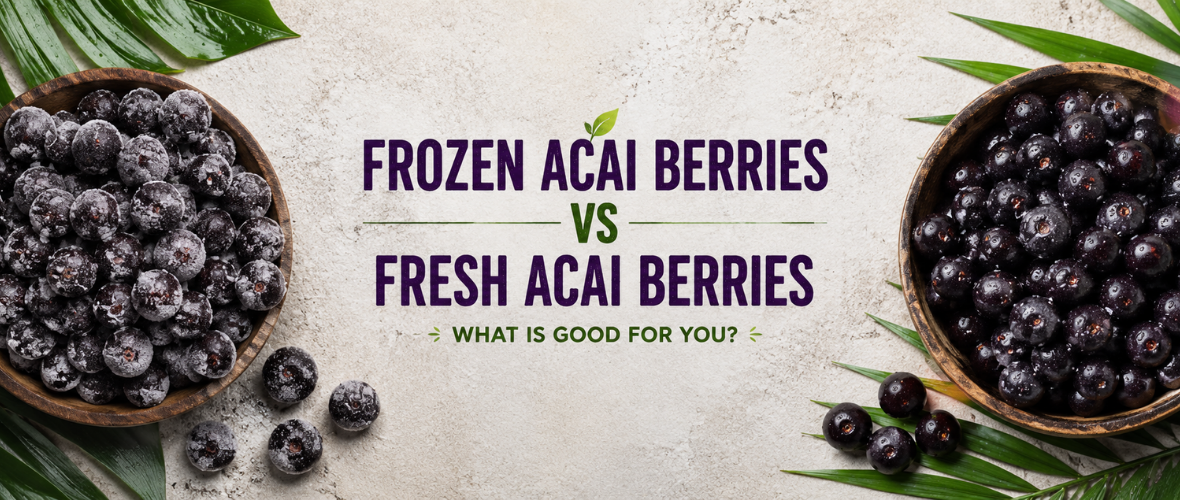
10. Acai Berry Fat-Flush Smoothie
Ingredients: 1 packet frozen acai (100g, unsweetened), ½ cup frozen mixed berries, 1 cup unsweetened almond milk, 1 tbsp flaxseeds, 1 tsp honey (optional)
Why it works: Açaí is very rich in antioxidants. Flaxseeds add omega-3 fatty acids and fibre. This smoothie is popular in the fitness community for its strong flavour and support for fat loss.
Approx. calories: 230 | Protein: 7g
Conclusion:
Frozen fruit smoothies are effective and flexible tools for a weight loss plan if prepared carefully. The key is balance: fibre from whole fruits, protein to keep you full, healthy fats for absorption, and flavours you enjoy. Whether you drink one before a morning jog or make a recovery shake after weightlifting, there’s a recipe that suits your schedule and goals. Keep it simple: start with one recipe this week, adjust it to your liking, and make it a regular part of your day.
Ready to blend something great? Buy your fruit today and fill your freezer with the best IQF frozen fruit — freshness locked in, ready whenever you are.




Share:
Ice Apple: The Cool, Hydrating Summer Fruit You’re Probably Missing
10 Best Frozen Red Currants Recipes You Can Make at Home