


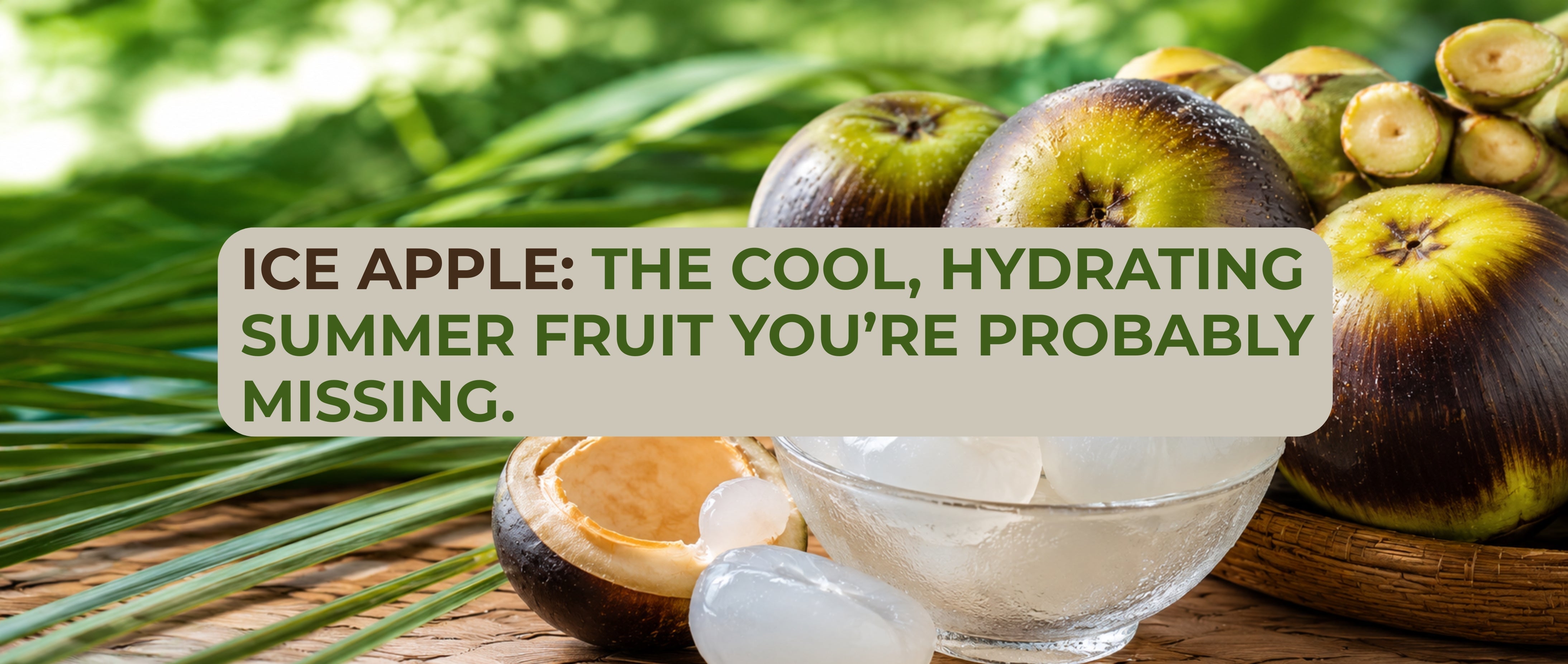
Ice Apple: The Cool, Hydrating Summer Fruit You’re Probably Missing
Ice apple is one of summer’s simplest pleasures and one of its smartest choices. This translucent, jelly-like fruit slips out of a thin brown shell and cools you from the inside out. Known as ice apple, tadgoda fruit, nungu, taal, or munjal, it offers a gentle, hydrating bite that delivers electrolytes, vitamins, and antioxidants without the heaviness of a full snack. In this guide, you’ll learn what ice apple is, where it comes from, how it tastes, its names in different languages, the nutrients it offers, and why it’s such a good choice to beat the heat.

What Is Ice Apple?
Ice apple is the soft, translucent fruit of the palmyra palm (Borassus flabellifer). Each palm fruit, a dark, coconut-like globe, holds three tender, water-rich seed sockets—those sockets are the “ice apples.” When young, they appear clear to milky white, wobble like jelly, and are filled with cool, mildly sweet sap.
- Botanical source: Borassus flabellifer (palmyra/toddy palm)
- Edible stage: Young, translucent seed endosperm inside the husk.
- Texture: Soft, slippery, jelly-like with a refreshing centre sap
You’ll find street vendors slicing open the husk and popping out the segments over ice. It’s seasonal and exactly what a hot afternoon needs.
Ice Apple Names: What Do They Call It in Different Languages?
The fruit has many local names across South and Southeast Asia. If you’re looking for it, this quick guide can help:
India (North): Taal, Taalshash, Tadgola/Talgola (commonly spelt tadgoda fruit)
India (Tamil Nadu): Nungu
India (Telugu): Taati Munjalu
India (Kannada): Taati Nungu
India (Malayalam): Karimpana/Nungu (regional variations)
Sri Lanka: Thal
Bangladesh: Tal/Boishakhi Tal (seasonal reference)
Nepal: Taal ko phal
Pakistan: Taad/Palmyra fruit
Thailand/Cambodia/Vietnam: Palmyra palm fruit (localised names, often sold as palm jelly)
If you’re shopping internationally, look for “palmyra palm fruit,” “ice apple,” “palm fruit (young),” or “nungu” at South Asian grocery stores in late spring and summer.
Origin and Cultural Roots of Ice Apple
The palmyra palm is native to South and Southeast Asia, thriving in sunbaked coastal areas and plains. It’s a multipurpose tree; its leaves are used for thatch, trunk sap for palm sugar, fibrous pulp for sweets, and the young seed jelly we call ice apple is eaten fresh.
- Geography: India, Sri Lanka, Bangladesh, Myanmar, Thailand, Cambodia, Vietnam.
- Seasonality: Late spring through monsoon (roughly April to July, depending on the region).
- Traditional uses: Fresh snacking, desserts, palm sugar syrups, fermented beverages, and summer coolers.
The tree is hardy and drought-tolerant, making its fruit available just when people need hydration most. In many regions, it’s part of everyday summer life—a quick roadside purchase, a bowl at home with palm jaggery, or a refreshing layer in sherbets and puddings.
How Does Ice Apple Taste?
Ice apple tastes like a blend of tender coconut water jelly and a barely sweet lychee—refreshing, delicate, and clean. The sweetness is mild, and the charm lies in the cool, slippery bite and the splash of sap that sits inside the jelly.
- Flavour: Subtly sweet, faintly floral, very clean
- Aroma: Minimal, with a hint of freshness
- Mouthfeel: Smooth, bouncy, hydrating
- Best served: Chilled, with a pinch of salt and lime, or drizzled with palm jaggery
As it matures, the jelly becomes firmer, and the flavour becomes more pronounced, but the best “ice apple” experience is when it is young and translucent.
Ice Apple Nutrients: The Hydration Hero
Ice apple is mostly water and natural electrolytes, making it great for rehydration without heaviness. While nutrition varies by maturity and region, a typical serving (about 100 g of the edible jelly) contains:
- Water: High (over 80–90%)
- Calories: Low to moderate (roughly 40–60 kcal)
- Carbohydrates: Light, mostly simple sugars for quick energy
- Potassium: Present, supports fluid balance and muscle function
- Sodium: Low, pairs well with a pinch of salt in hot weather
- Vitamins: Small amounts of vitamin C and B vitamins (notably B1, B2, B3)
- Minerals: Trace magnesium, calcium, and iron in small amounts
- Phytonutrients: Antioxidants and polyphenols vary by maturity
Key takeaway: It’s a gentle, easily digestible source of hydration, with supportive electrolytes and light energy—perfect for hot afternoons, post-walk refreshment, or a mid-morning cool-down.
Why Ice Apple Is Good for Summer
- Hydration support: The high water content and natural sugars help replenish fluids quickly.
-
Electrolyte balance: Potassium supports fluid regulation, especially after sweating.
Cooling effect: The jelly texture and sap provide an immediate “cool mouthfeel,” helping you feel refreshed. - Light on digestion: Minimal fibre and gentle sugars make it easy on the stomach, especially when the heat reduces appetite.
- Versatility: Eat it plain, chill it, blend it, or mix it into curds and fruit bowls to enjoy variety throughout the season.
For those sensitive to heavy, oily snacks in summer, ice apple is a simple substitution that restores hydration rather than depletes it.

How to Choose and Store Ice Apple
Choosing Fresh Fruit
- Look for intact brown husks without deep cracks or sour smells.
- When opened, the jelly should be translucent to milky, not yellowed or rubbery
- Avoid any fermented smell or fizz; that suggests over-maturity or spoilage.
Storing at Home
- Keep whole husks cool and shaded; use within 1–2 days.
- Once extracted, rinse lightly, keep chilled in a covered container, and consume within 24 hours.
- Do not freeze the raw jelly; it turns watery and loses its firmness. If needed, freeze it as a blended puree for smoothies or pops.
How to Eat an Ice Apple: Simple and Delicious Ideas
1) Classic Chilled Ice Apple (5 minutes)
- Ingredients: Ice, apple segments, a pinch of rock salt, and ½ lime.
- Method: Chill segments, squeeze lime, add salt, serve immediately.
- Why it works: Salt and lime enhance the delicate sweetness and support hydration.
2) Nungu Rose Cooler
- Ingredients: Chilled milk or plant milk, rose syrup, chopped ice apple, ice.
- Method: Swirl rose syrup in milk, fold in diced ice apple, and serve over ice.
- Tip: Use palm sugar syrup for a deeper caramel note instead of rose.
3) Coconut–Ice Apple Smoothie
- Ingredients: Tender coconut water, a few ice apple segments, a splash of lemon, and mint.
- Method: Pulse until just combined—don’t over-blend; you want bits of jelly.
4) Yoghurt Fruit Bowl
- Ingredients: Thick curd or Greek yoghurt, diced mango, ice apple, roasted chia or sabja seeds.
- Method: Layer yoghurt, add fruit and seeds, and drizzle with palm jaggery.
5) Popsicle for Hot Days
- Ingredients: Coconut water, blended ice apple, a touch of honey, lime zest.
- Method: Stir, pour into moulds, and freeze. Light, clean, and perfect for a post-walk cooldown.

Ice Apple vs. Tender Coconut vs. Nata de Coco
- Ice apple: Naturally occurring jelly in the palmyra fruit; mild sweetness; eaten fresh.
- Tender coconut: Coconut water plus soft white meat; more aromatic, slightly richer taste.
- Nata de coco: Fermented coconut water jelly; chewier, dessert-like texture.
Each cools you down, but the ice apple is the most subtly flavoured and least processed option.
Seasonal Availability and Buying Tips
- Peak window: Late spring to early monsoon. In many Indian cities, May to July is the best time.
- Where to buy: Street vendors, local markets, South Asian grocery stores. Ask for nungu/tadgola/tal based on your region.
- Price range: Varies by city and season; quality and freshness matter more than size.
Pro tip: If a vendor allows it, taste a small piece before purchasing. You’re looking for a clean, sweet sip with no sourness.
Safety, Allergies, and Who Should Be Cautious
- Allergies: Rare, but those allergic to other palm products should try a small amount first.
- Diabetes: Natural sugars are present. Pair with protein or fat (like yoghurt or nuts) and monitor portions.
- Infants/toddlers: Choking hazard due to slippery texture. Finely chop or mash, and supervise closely.
- Food safety: Consume fresh; avoid if the fruit smells fermented or appears yellow-brown and rubbery.
If you have a medical condition that’s sensitive to sugars or electrolytes, consult your healthcare provider before adding new fruits to your diet.
Ice Apple and Weight Management
Ice apple, which is hydrating, low in fat, and has relatively low calories, can fit into weight-conscious plans:
- Snack swap: Replace fried snacks with 2 to 3 lime segments and salt.
- Volume eating: Add diced ice apple to yoghurt or salads for bulk with minimal calories.
-
Dessert fix: A small bowl with palm jaggery syrup is a better choice than heavy sweets on hot days.
Remember, moderation still matters. Natural sugars are still sugars.
Sustainable and Local Benefits
Palmyra palms thrive in hot, dry climates and need less intensive care than many irrigated crops. Buying seasonal ice apple:
- Supports local livelihoods, including harvesters and vendors.
- Encourages diverse, climate-resilient farming.
- Reduces the footprint linked to cold-chain desserts and packaged drinks. Choose vendors who handle fruit safely and avoid plastic when possible. Bring a reusable container.
Quick Buying and Eating Checklist
- Look for translucent, tender jelly segments without a sour smell.
- Chill before serving. Add lime and a pinch of salt for extra refreshment.
- Enjoy within a day of purchase for the best texture and taste.
- Pair with yoghurt, coconut water, or seasonal fruits for a more satisfying snack.
Conclusion
Ice apple earns its reputation honestly. It cools you down, quenches your thirst, and fits seamlessly into hot-weather routines. With names that vary by region and a flavour that doesn’t need extra ingredients, it meets your body’s summer needs for water, electrolytes, and light energy. If you see nungu, tadgola, or taal at your market this season, don’t hesitate.


Share:
7 Best Frozen Ripe Jackfruit Recipes That Taste Like the Tropics
The Best Frozen Fruit Smoothies for Weight Loss: Recipes, Tips & Expert Guidance