
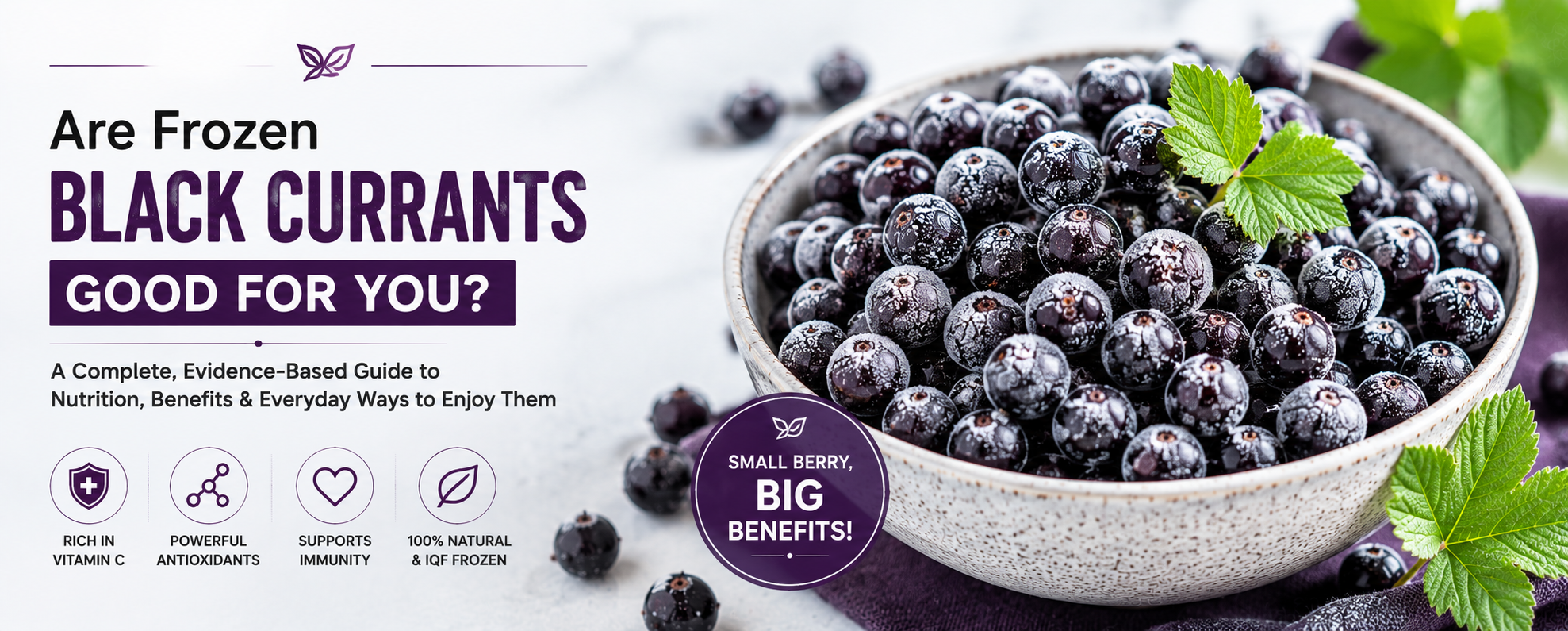
Are Frozen Black Currants Good for You? A Complete, Evidence-Based Guide
Black currants aren't given the recognition that they merit, mainly since it's difficult to find them fresh except during a short summer period. Frozen black currants overcome this issue without losing much of their nutritional value. For those who care about their health, practise yoga, are athletes aiming to gain muscle mass, or are simply someone who can afford to be selective about what goes into the freezer, this fruit is well worth examining more closely. We'll look at the science of the health benefits of frozen black currants, compare them with fresh fruit, examine their part in weight management, and provide some practical ways to use them — such as in smoothies and sauces. Ultimately, you'll have a clear understanding of where this small, tart berry fits within a wise, up-to-date diet.
What are frozen black currants?

Black currants are small, deep-purple berries which are native to Europe and certain areas of Asia and are valued for their sharp taste and strong colour. Since the period in which they can be harvested fresh is short—usually only a few weeks in mid-to-late summer—the majority of the black currants that are available in a commercial sense are frozen shortly after being picked.
Many brands employ IQF, or individually quick frozen, processing, which involves freezing each berry separately at very low temperatures almost immediately after it has been harvested, rather than freezing the fruit in a solid block. The outcome is that the berries remain loose in the bag, keep their shape, and retain a greater amount of their original nutrient content than is possible with slower freezing methods.
Is it good for you to eat frozen black currants? The brief answer
Yes, frozen black currants are beneficial for your health and, in terms of nutrition, they fare very well compared to fresh fruit—on certain occasions even beating it. Since the IQF freezing takes place within a few hours of harvesting, the berries remain at their peak ripeness. Fresh black currants, on the other hand, start to lose vitamin C and other delicate nutrients as soon as they are picked, and this loss speeds up the longer they stay on the shelf or in the refrigerator.
Core Nutrition Breakdown of Blackcurrants (per 100g, unsweetened, thawed)
- Calories: approximately 63
- Fiber: about 4.3g
- Vitamin C: roughly 180mg (more than double the amount found in oranges, gram for gram)
- Potassium: a solid contributor to daily requirements
- Antioxidants: exceptionally high in anthocyanins, particularly delphinidin and cyanidin compounds
- No common fruit provides such a high concentration of vitamin C and antioxidants in such a small amount, which is one of the reasons why black currants have gained a reputation for being a true nutritional powerhouse.

Frozen Black Currants Health Benefits
1. Vitamin C and Immune Support
Vitamin C plays a key role in supporting the immune system. It helps white blood cells work better, which protects the body against infections. Vitamin C also works as an antioxidant. This means it helps protect cells from damage caused by free radicals. Some studies show that getting enough vitamin C can lower how long a cold lasts and make symptoms less severe. However, taking large doses does not prevent you from getting sick. A balanced diet with enough vitamin C helps keep the immune system strong. Good sources include citrus fruits, strawberries, bell peppers, and broccoli.
Black currants are among the most vitamin C-rich of all natural foods and a 100g portion can meet or go beyond the daily recommended allowance for the average adult. Frozen black currants keep their vitamin C content because freezing stops the oxidation process, which would otherwise cause the vitamin C to break down over time. This makes them a significant benefit for people who are relying on whole foods to help build up their immune resilience when compared with a great many other fruits.
2. Support for anti-inflammatory action through anthocyanins
The deep purple-black colour of the berry is due to anthocyanins, a group of antioxidant substances which have been linked to a reduction in oxidative stress and inflammation in the body. For athletes and yoga practitioners who have to cope with the physical effects of regular training, including anthocyanin-rich fruit in their diet is a simple habit that is supported by evidence.
3. Eye Health
The black currant has compounds which have been studied for their possible benefit in promoting eye health, such as helping to reduce eye strain and supporting good blood flow to the retina; although further research is still being carried out, the antioxidant properties of the berry make it a sensible choice for people who spend long hours in front of screens.
4. Heart Health
The potassium and polyphenol content found in black currants may contribute to healthy blood pressure and vascular function, and since diets high in berries have always been linked to better cardiovascular markers in population studies, black currants are in keeping with that pattern.
5. Digestive Health
Frozen black currants contain about 4.3g of fibre per 100g and therefore make a significant contribution to daily fibre intake, helping to maintain regular bowel movements and promoting a healthy gut microbiome. Additionally, the fibre slows down the absorption of sugar, which in turn helps to avoid the energy crashes associated with rapidly digested carbohydrates.
Is it good for weight management to eat frozen black currants?
It's a frequently asked question, and the reply is a definite yes in most cases. Frozen black currants are naturally low in calories and, if they are purchased without any sugar having been added, contain no added sugar — it's important to always check the label, since some mixes of frozen fruit do include syrup or juice concentrate.
Here's why they work well in a weight-conscious diet:
- It has a low calorie density; since it contains about 63 calories per 100g, you can have a large portion with only a small effect on your calorie intake.
- It has a high ratio of fiber to calories. Since fiber causes a feeling of fullness, it helps with controlling portions and leads to less eating of less nutritious foods.
- Naturally tart and with a low sugar content. Unlike a great many frozen fruits, black currants are not syrupy-sweet by themselves, which makes it easy to include them in meals without causing sugar intake to rise too much.
- The convenience of portioning. With IQF freezing, you can easily take out exactly how much you need for your smoothie or bowl, instead of having to guess when using a punnet of fresh berries, which may already be overripe.
Frozen black currants provide a great deal of nutritional value—such as fibre, vitamin C, and antioxidants—for very few calories, which is precisely the kind of trade-off that a lean, performance-oriented diet is based on.
Which wins, frozen black currants or fresh black currants?
|
Factor |
Frozen Black Currants |
Fresh Black Currants |
|
Availability |
Year-round |
Seasonal (roughly July–August) |
|
Shelf life |
8–12 months |
1–2 weeks refrigerated |
|
Nutrient retention |
High, locked in near harvest |
Declines with storage time |
|
Convenience |
Pre-washed, ready to use |
Requires stemming and rinsing |
|
Cost |
Often more affordable outside season |
Can be expensive and hard to find |
|
Texture |
Slightly softer once thawed |
Firm skin, juicy burst |
The main difference lies in texture. Fresh black currants have a tough outer skin which gives way to a juicy and sour inside — a texture which is difficult to fully copy after the berries have been frozen and then thawed, as the ice crystals damage part of the cell structure. Because of this, frozen black currants are more appropriate for use in smoothies, when baking, in sauces and for cooking rather than for eating raw in large amounts. Yet in terms of nutrition the two are very similar, and frozen currants often have the advantage simply because they avoid the gradual loss of nutrients that takes place during the storage and transportation of fresh ones.
Frozen Black Currant Recipes to Try
This fruit can be used without needing a particular season or a special occasion. Here are some practical, everyday suggestions:
-
Smoothies
To make a tart, antioxidant-rich breakfast or a post-workout shake, combine frozen black currants with Greek yogurt, a banana, and a little oat milk.

-
Overnight Oats
Before you refrigerate the oats, add a spoonful of frozen black currants to them; they will thaw naturally and give the oats a deep purple colour and a tangy taste.
-
Compote or Sauce
To make a low-sugar compote, gently cook some frozen black currants with a little water and a natural sweetener such as honey, and then serve it over yogurt, pancakes, or roasted meats.
-
Salad Dressing
To make a tart, antioxidant-rich vinaigrette, mix the thawed black currants with olive oil, a little balsamic vinegar, and Dijon mustard.
-
Protein Bowls
To make a recovery snack that is high in fibre and protein, top a bowl of cottage cheese or quark with some thawed black currants, a few walnuts, and a drizzle of honey.
Buying and Storing Tips for Frozen Black Currants
- Look at the ingredient label and, if you can, select products that are labelled 'unsweetened' or 'no sugar added'.
- IQF processing can be found on the packaging, and this indicates that the product has a better texture and better nutrient retention.
- To avoid freezer burn and to keep the quality of the food, make sure that the temperature in the freezer is set at 0°F (-18°C) or lower.
- The best flavour can be obtained by using the berries within 8 to 12 months, although they will remain safe if stored properly long after that period.
Do not refreeze black currants that have been thawed — to reduce waste, divide them into portions before defrosting.
Conclusion:
Frozen black currants are highly nutritious relative to their size, containing more vitamin C per serving than most fruits in the world, together with a good amount of fibre and antioxidants. They perform very well when compared to fresh berries and, since they are available all year round, they are a much more practical option if you want to use them regularly. Whenever you're making a recovery smoothie after a session of yoga, need a boost before a workout, or are simply aiming to eat more mindfully, frozen black currants can easily be included in your routine as supported by evidence. Ready to stock up?






Share:
10 Best Frozen Red Currants Recipes You Can Make at Home
15 Delicious Ways to Use Speculoos Spread (Beyond Just Toast)